


Welcome to Original Jurisdiction, the latest legal publication by me, David Lat. You can learn more about Original Jurisdiction by reading its About page, and you can email me at davidlat@substack.com. This is a reader-supported publication; you can subscribe by clicking here.
Legal AI is a big deal—and a big business. How do we know this? It’s attracting interest beyond specialized, law-focused providers like Harvey and Legora (which are themselves already multibillion-dollar businesses).
Last month, Google announced Gemini Enterprise for Legal, part of the company’s growing suite of purpose-built industry solutions. What makes this new product different from general-purpose AI?
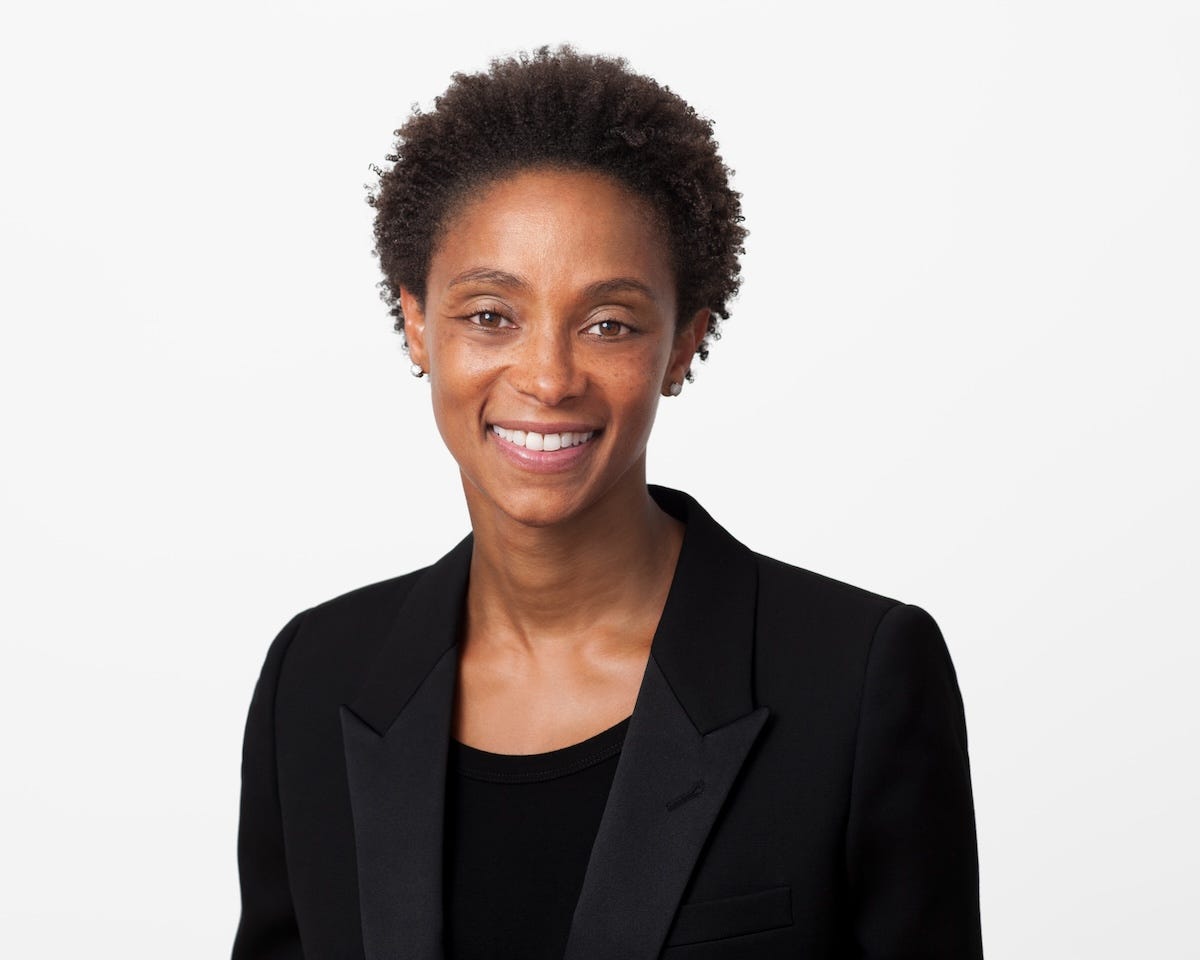
To learn more about Gemini Enterprise for Legal, I interviewed Halimah DeLaine Prado, who has served as GC of Google since 2020. But given the breadth and importance of Halimah’s role and Google’s many appearances in the news these days, we covered other subjects as well—including the ad-tech antitrust litigation, in which a major ruling came down last week, and the proliferation of lawsuits against social-media platforms like YouTube, which Google owns.
Thanks to Halimah for her time and insight, and congrats to her and her colleagues on the launch of Gemini Enterprise for Legal.
Show notes:
Exclusive: Google’s general counsel says AI can’t replace human judgment, by Ina Fried for Axios
Now introducing Gemini Enterprise for Legal, by Thomas Kurian for Google Cloud
Sponsored by:

NexFirm helps Biglaw attorneys become founding partners. To learn more about how NexFirm can help you launch your firm, call 212-292-1000 or email careerdevelopment@nexfirm.com.
Three quick notes about this transcript. First, it has been cleaned up from the audio in ways that don’t alter substance—e.g., by deleting verbal filler or adding a word here or there to clarify meaning. Second, my interviewee has not reviewed this transcript, and any transcription errors are mine. Third, because of length constraints, this newsletter may be truncated in email; to view the entire post, simply click on “view entire message” in your email app.
David Lat: Welcome to the Original Jurisdiction podcast. I’m your host, David Lat, author of a Substack newsletter about law and the legal profession also named Original Jurisdiction, which you can read and subscribe to at davidlat.substack.com. You’re listening to the 104th episode of this podcast, recorded on Thursday, September 3.
Thanks to this podcast’s sponsor, NexFirm. NexFirm helps small and midsize law firms offer Biglaw-caliber benefits at small-firm prices. To learn how NexFirm can improve your employee benefits program, call 212-292-1002 or email betterbenefits@nexfirm.com. Want to know who the guest will be for the next Original Jurisdiction podcast? Follow NexFirm on LinkedIn for a preview.
My guest today is Halimah DeLaine Prado, who has served as general counsel of Google since 2020 and worked at the company for the past twenty years. Prior to joining Google in 2006, she was a litigator at Dechert and clerked for Judge Mary McLaughlin in the Eastern District of Pennsylvania. Halimah graduated from Yale College and Georgetown Law.
Halimah and I began our conversation by talking about Gemini Enterprise for Legal, Google’s AI solution for lawyers and law firms, which the company announced last month and is now making available in preview for Google clients. We then pivoted to cover antitrust litigation involving Google—including the advertising technology or ad-tech lawsuit, in which the company just received a notable ruling on remedies—and litigation against social-media platforms, which implicates Google as the parent of YouTube. Finally, we concluded by tackling the affirmative litigation that Google is bringing against scammers, hackers, and other bad actors who misuse Google products. Without further ado, here’s my conversation with Halimah DeLaine Prado.
Halimah, thank you so much for joining me.
Halimah DeLaine Prado: Thank you for having me, David.
DL: Tell us about your background and upbringing. Where did you grow up?
HDP: I am a proud native of the Philadelphia suburbs. I grew up on the East Coast and spent the bulk of my education and early legal career up and down the Northeast Corridor, for those familiar with the Amtrak. So a bit of Philadelphia, D.C., Connecticut, and New York thrown in for good measure.
DL: Did you have any lawyers in the family or any early exposure to law? I believe your mother worked in finance.
HDP: No lawyers in the family. My mom was an options trader, and my dad was a chef. So my interest in law came on its own; I came by it honestly. As a child, I was pretty curious about the law, to the point where I bugged my parents to sign me up for, oddly enough, a criminal-defense summer camp at the University of Pennsylvania when I was in sixth grade.
It was a little wild; I’m pretty sure they don’t do that anymore. But what was cool about it was they took a small group of middle schoolers and ran us through what the criminal-justice system looked like. We got to observe court proceedings. We toured a jail. Remember, this was the ‘80s, everything went—and so you could do that. It actually was a pretty foundational moment for me in terms of my interest in the law. When I came out of that, I was hooked and wanted to do more.
DL: What created your initial interest? Because you asked your parents to be signed up for this, you must have had some preexisting interest. Was it a book? Was it a movie? Was it a lawyer you knew as a family friend?
HDP: Maybe option (d), all of the above. Part of it was that I would see lawyers on television, everything from Perry Mason to Matlock. And after reading To Kill a Mockingbird and understanding Atticus Finch, this notion of lawyers and their impact on others was interesting to me—unfamiliar, but interesting. So wanting to sign up for that camp was my way of making it a bit more tangible and a little less just on the pages of a book or on TV.
DL: So by the time you got to Yale for college, you had this interest in law already. Did you major in something that lent itself to going to law school?
HDP: I was pretty typical. I majored in political science—which, to be honest, was so much broader than I thought at the time. I figured I would go to law school at some point, but wanted to actually understand the foundations of political thought. I wasn’t necessarily sure what that would lead towards, but it was legitimately interesting to me.
DL: And then when you went to Georgetown Law, did you have a sense of what you wanted to do afterwards? You had this exposure to litigation, so I might’ve thought you were interested in that, although now in your in-house role, you wear a lot of different hats.
HDP: Fair. So I think I started off going to Georgetown thinking that I wanted to be a public-interest lobbyist, neither a litigator nor involved in tech. As I came through law school, I really wanted to focus on issues of access and how I could actually be a force for good, either advocating for those without access or creating access where none existed. Oddly, that very much maps to my current role, at least in terms of the company that I work for, in terms of access. But at the time in law school, I really thought of a more traditional notion of it, which was public interest.
DL: And actually your first job out of law school was a form of public or government service, correct?
HDP: Correct. I clerked for a judge in the Eastern District of Pennsylvania—probably one of the best one-year educations that you can get. You clerked as well, so you know this. You come out of undergrad and law school feeling pretty good about your academic prowess and how you show up in the world. And as a clerk, you really are starting from ground zero, learning how to write it again. It is humbling at best, incredibly challenging, and again, you’re having an active, direct impact on the judicial system—which is a privilege, to be honest. So it’s the best of everything: honestly, one of the best and toughest years of legal education that I probably had in my career.
DL: I totally agree, and I totally recommend clerking to people who are interested in litigation. So after your clerkship, did you then do litigation?
HDP: I did. So I switched—well, not even switched, but declared a major, if you will, into litigation. Part of my diet, about half, was a bit of First Amendment defense work. We represented a lot of the local newspapers—I was in Philadelphia at the time, so the Philadelphia Inquirer and the Daily News—if they were being sued for defamation or if they were trying to achieve access to certain documents. And the other half of my practice was a mixture of commercial litigation, mass tort, product liability defense, and then, for good measure, a little bit of white-collar investigations on the side.
DL: And this was at Dechert, I believe?
HDP: Correct; that’s right. I was at Dechert, back then Dechert Price & Rhoads, in Philadelphia.
DL: Yes, exactly. We can date ourselves by how we can still remember the full names of all these firms. Now, for marketing purposes, they’re all down to one name—so if you want your name to stay on the door, try to be first.
But I feel that to be the GC of a major company, litigation is probably not the most common background. Doing this mix of litigation—commercial litigation, First Amendment litigation, etc.—do you draw on that experience in your job today?
HDP: I do, actually. It’s a bit of a mixture. I actually joined Google as a product counsel; I did not join the litigation team at all. And so for the bulk of my time as an individual contributor within the company, I actually worked on counseling the teams to launch products. And so I actually think that mixture of both my private-practice experience as a litigator and the focus on the First Amendment work definitely plays a role in my current job. But really, I think what makes me well suited for the role is my exposure to the product and engineering teams. If you’re going to be a general counsel at any company, you need to understand the business, and you want to have a fluency in that: what the ecosystem is like, the industry, and how do you support it.
DL: You’ve been at Google now for 20 years—and maybe just last month or so, you celebrated six years as GC.
HDP: That’s right. It’s been six years.
DL: It’s interesting that you started off at the company on the product side, because I don’t necessarily know that I would’ve thought of litigation as the background for being a products in-house lawyer. Maybe I would’ve thought some kind of more commercial or contract-focused practice would’ve been more natural. Was that a challenging transition?
HDP: It was an interesting transition. So to back up a little bit, I was in private practice and really at that inflection point of, “Do you become a partner, or do you think about in-house or some other opportunity?” At the time that I was weighing those opportunities, a question had been posed to me: “What do you like doing?” And what I liked about my private practice was the counseling of the clients in a crisis or in an issue. And so that lent itself to the next question, which was, “Where would you like to do that type of work, if you could just do that work all day?”
And I thought about it. A mentor of mine said, “Part of what keeps you going is that you’re either anchored to the principle, the product, and/or the people.” And I thought about what the products were at the time that I was so into, where I would love to defend them for time immemorial. Two things came up. One, I love music—all forms. And so one thought was, “Oh, well, I like an iPod. I like Apple. That seems cool.”
But what I also really, really liked was the idea of access to information. And at the time, probably 2005 or 2006, Google as a search engine was really mind-boggling to me in terms of this democratized access to information. So I went online, onto their website, I clicked the jobs button, and I applied to the two jobs that were listed on the website. One was for “litigation counsel,” and one was for something interesting that said “product counsel,” which I did not feel that I was probably equipped to do, but I liked the job description. So I applied to both.
DL: So it was not a case where you were doing work for Google as outside counsel or you had some kind of connection who pulled you into the company. You just applied cold off the website.
HDP: I was a cold call—a total cold call. I dusted off my résumé, I created a Gmail account for myself, and I pressed send.
DL: Wow. Okay. Well, it’s obviously worked out for you!
HDP: I won’t complain. I won’t complain.
DL: And—full disclosure to my listeners—not only am I a user of many Google products (like pretty much everyone walking earth), but I’m also a Google shareholder since something like 2012 or 2014. The stock has done very well, so thank you for your work.
HDP: We try.
DL: So speaking of product, which is where you got your start at Google, Google has a new product. Just last month—in fact, it might have even been last week—you announced the rollout of Gemini Enterprise for Legal, which is your law-focused AI product. Just to set the table, what would you want an audience of law firm and in-house lawyers to know about Gemini Enterprise for Legal?
HDP: What’s fun about this offering is that it’s an AI assistant that is built specifically for law firms and legal teams, as opposed to being a generic tool that doesn’t understand the unique needs of lawyers. How does it do that? Well, it actually plugs into the software layers that lawyers and firms use every day. So take Google Docs, for instance: you don’t have to do this constant switch back and forth between tools, which can add some drag and friction to the work that you’re doing.
Now, what the team has also done, which is very cool, is that they’ve loaded what I will call some specialized skills to handle the heavy legal tasks—things like redlining contracts, creating playbooks to track regulatory changes or changes in academic thought, and even pulling privacy requests. So the idea is that effectively we have a platform that is built specifically for the security and compliance and workflow realities that a law firm or a legal department deals with day-to-day.
DL: It sounds like you must have put a lot of work into developing this product. Can you talk about how you essentially trained this AI tool to know about legal? Because as we know, law is technical, law is complicated, law is confusing. How long was the product under development, actually?
HDP: Well, I can’t give too much of the secret sauce about our product development. What I can say, and what has been great about this offering, is that there was very much a co-development that took place. We partnered with a bunch of law firms to say, “Here is our existing platform of Gemini Enterprise”—which is the use of Gemini for businesses—and we brought it into their existing system, an end-to-end first-party stack. We worked with law firms to understand their needs.
How do you then use that Gemini Enterprise to train for the specific needs of a given law firm? You’re effectively training the model just on the information that particular firm or industry needs, and it stays there. So what we do is we keep the AI reliable by relying on the information you have and not using it to train our foundation model. So it protects the intellectual property and privilege of our partners but actually still produces an output that’s very useful for them.
DL: So if I am a user of Gemini Enterprise for Legal, I don’t have to worry that my confidential or privileged information, or my client’s confidential or privileged information, is being somehow fed into your platform for training purposes.
HDP: Correct. That would defeat the purpose. As lawyers, we have duties. We have a duty of privilege. We have a duty of confidentiality. And so as a company, we’ve got to build tools that meet our customers where they’re at and meet their needs. And so we have to build a platform, we have to build a plugin, that actually respects all of those security, privacy, and compliance requirements that an industry demands.
DL: And that’s really something that lawyers who use AI need to focus on, just in terms of data security and architecture, and how you design a system that respects client information. Some people might think, “Well, if it’s all within the law firm, maybe it’s okay.” But what about different teams within a giant firm working on different matters, possibly for competitors or companies that might have issues with each other? So it seems that clients need to be mindful of how they handle... Actually, well, you’re a client. You must be very mindful of how your information is handled by your outside counsel.
HDP: For sure. This is a benefit, I think, of Gemini Enterprise for Legal, because what it allows is it gives firms and legal departments a dashboard. It is a single dashboard, but they can manage those security and access questions you’ve just posed. So they can put in access controls that are project-based, recognizing that as a firm, they’re going to have many clients, and the idea is to keep individual client information secure and to leverage that in that instance, but not at the expense of your duties of privilege.
DL: But on the other hand, if I’m doing some very general research that might be valuable across clients, and it contains no privileged or confidential information, can I toggle that so it will stay within my version of Gemini Enterprise for Legal, but it will transcend clients or matters?
HDP: It depends on what the individual law firm or legal department is comfortable with. You will set the parameters of what you want in a given query within Gemini Enterprise for Legal: what documents, what repositories, what tools you want to pull from to generate that output you’re looking for. So different firms and different companies will have a variety of views and notions of what they need.
I’ll give an example: if you are looking for a particular type of model clause for a rep and warranty, and you’re looking across your body of contracts to find that—that’s something fairly benign and generic that helps a drafting attorney figure out where they need to land on the topic. Whereas if you work in a particularly nascent area—say, within security legal or something like that—you’re probably going to want to be a little more succinct about what information you’re using and how. And the beauty of the dashboard is that it allows for that to happen. Also, when we partner with law firms, we get a sense for where they want to make that decision at a high level, at the enterprise level, versus where they actually want to add individual controls for individual attorneys interacting with it.
DL: Is Gemini Enterprise for Legal already available, if somebody wants to just go and get it?
HDP: It’s available insofar as you can contact us, and we can figure out the best way to work that in. If you have an existing Google Cloud stack, for instance, contacting us allows us to dig in and really co-create what your needs are, to make sure we’re launching this in the best way that makes sense for your business.
DL: You alluded to this earlier, but one thing that is a big deal in Silicon Valley, of course, is interoperability across platforms or tools. On the one hand, companies are very proprietary, but on the other hand, you need to recognize that you’re not the only company on Earth, and your clients may be using a variety of products from a variety of companies. So it sounds like you have designed Gemini Enterprise for Legal to work with, say, Microsoft products, or Harvey, or Legora, or things like that.
HDP: Yes, that’s table stakes. If you’re actually going to provide an enterprise platform, you need to have the ability to scale with an open partner ecosystem. Firms use different tools and technologies for different things, and you have to be able to accommodate that diversity. Every firm and legal department practices differently—you could even have diversity of tools within the same legal department. My copyright attorneys might prefer a certain tool, while my litigators prefer to use something else. And so for us, partnerships with global systems integrators and different legal tech specialists let organizations customize their installations of Word, Harvey, Everlaw, and other tools, and scale that across their department and architecture without being locked into one particular vendor.
DL: That makes perfect sense. Speaking of users, I’m guessing that you and your, I don’t know, 1,200 or 1,400 lawyers at Google—how many are you up to now?
HDP: More or less, that seems about right. You’re in the ballpark.
DL: So I’m guessing that the chef should probably taste the cooking? I’m guessing that you are using Gemini Enterprise for Legal in your own very complex legal matters?
HDP: So we’ve definitely begun to experiment with it. Now, the irony—and the reason why I say we have “begun to experiment with it”—is that because our team has been using AI tools for years now, and we have very much reaped the benefits of being able to use AI in our day-to-day work, we are able to experiment with what’s been launched recently with Gemini Enterprise, but we are still moving forward with our existing AI tools. This gives us the best of both worlds.
DL: You’re kind of a victim of your own success because you’ve been using AI for so long, you were using it before Gemini Enterprise for Legal existed.
HDP: Correct. And actually, to be fair, we need to, right? The modern legal department or law firm has to be able to seize this moment. And the best way to do that is, first, to experiment to validate the technologies and tools that are of interest in your department, and then scale, because we need to move with the velocity at which the business is moving. So while we’ve been given a bit of a head start, if you will, what is great about Gemini Enterprise for Legal is that we now can see how this tool will supplement the work that we’ve been doing already.
DL: If you’re the managing partner of a boutique or midsize law firm, attracting and retaining great people is your most important responsibility. Competing with Biglaw for talent is difficult when your benefits don’t measure up. NexFirm helps you offer Biglaw-caliber benefits at a price built for smaller firms. To learn more, call 212-292-1002 or email betterbenefits@nexfirm.com.
So I’m guessing that because you’ve been users of AI internally for a while, you were also able to contribute notes to the development of the product, like your law firm partners.
HDP: Right. We do this from an interesting angle: one, as the lawyers helping to launch a given product—how do you launch that legally into the world? And two, we do this as consumers—what is the practical reality of that use? To a certain degree, it’s actually a fun time to be a lawyer in this space, because how often is it that we’re also asked our opinion as a consumer, as an actual practicing lawyer? So that part’s been fun.
DL: Yes. I could easily imagine an engineer or a product designer asking you or one of your colleagues, “Hey, try out our tool for contract drafting and tell us what features you want added or what features are not performing up to standard yet.” So that’s really interesting.
Looking beyond your own in-house lawyers, has AI changed your approach to hiring outside counsel? And more specifically, has it affected your billing arrangements? Because everybody is saying, “What’s going to happen here? Is it going to be a lot more alternative fee arrangements? Or is it just going to be the billable hour—but maybe a $25,000 billable hour, because you have so few of those human hours, since AI is doing so much? So maybe it’s a $25,000 hour, but you need only one of them?”
HDP: It’s a great question, and it’s one that I’ve had with heads of law firms, other heads of legal departments, GCs, and the like. As it relates to us, or Google, and how we engage with outside counsel, we look for outside counsel who are leaning into this moment, but leaning in authentically. I don’t want to work with a firm that’s basically using AI as sort of a marketing sound bite, if it’s not actually fit for purpose.
Every firm is at different stages of that journey. You have some firms who are very forward-thinking and have even gone out and acqui-hired or purchased companies that serve as the backbone of the AI solutions, and you have other maybe smaller firms who are just starting to test out or play around with different technologies and tools that are off the shelf and on the market. All of those are valid. So when we reach out to outside counsel, we want to understand how are they engaging with AI. How is it helping them? What are they experiencing? Part of that is because that type of forward-thinking, that appetite to engage with technology, needs to map to our own. And it actually creates a bit more of a meeting of the minds in terms of partnering on complex matters in the future. So that’s our mindset of AI with firms.
So what does that mean for the billable hour? It’s a great question, and a lot of folks have talked about whether or not the billable hour will survive. I think it will need to change. AI is a great many things—it will not replace judgment, but it will replace, one, repeatable tasks, and two, the ability to access information much more quickly than when you and I were clerks, when we’d have to go pull a book from the shelf, compare that with Westlaw, and spend hours taking notes to figure it out. That’s compressed from days to minutes—and, ostensibly, so it will go with the bill.
And so the question will become for firms to be able to run, you need to think about alternative fee arrangements that, one, compensate firms for that unique judgment, but do not bill companies for the type of work that is actually being pushed off or moved to AI and/or, frankly, that the in-house department itself may actually be able to do in the first instance. So you’ll see more of that; that’s the right call. It remains to be seen as to how that works across different subject matters within the legal ecosystem, but I do think we are moving towards a world where alternative fee arrangements are in fact probably the right vehicle moving forward.
DL: You mentioned, of course, that it’s going to affect what clients are willing to pay for when it comes to more rote or repeatable tasks. Do you have a prediction about how AI will affect employment in the legal sector? Because there are different predictions. Some people say it’s going to drop dramatically because the robots are going to take our jobs. Other people say, no, it’s actually making projects that were not, say, viable or cost-feasible, now feasible. Or if it increases the activity levels of our clients because they’re more productive, it will increase the amount of legal work we get to do. Where do you fall in that debate?
HDP: I fall very heavily in the “AI does not replace judgment, and very much what probably led us to become lawyers was the ability to express our judgment” camp. It’s the ability to answer those unanswerable questions using a combination of debate, reason, persuasion. While AI is a complement to that, it is not a replacement. Now, where I think the industry will change is the nature of how we do that will be different—including how you train folks in law school to understand how to harness the possibility of AI to further give them runway for legal judgment matters.
So the jobs might be fewer in terms of the repeatable tasks. Those jobs probably will look a little bit different, and you might find that you have people who are managing agents as opposed to doing those repeatable tasks themselves. But in terms of the lawyering, in terms of the actual judgment, the coming up with a unique argument to take to a circuit court or a jury—which by the way will not be robots, but in fact humans—that requires you to have a human being talking to those same humans, employing those trial skills and on-the-ground nuance and seasoning and judgment to actually defend a client.
So I do think it’s a shift. I want to be super clear: it’s a shift, but it is a shift in the same way that we are seeing tech impact other jobs and industries. I’m thinking about the headset I have on right now, and switchboard operators, and how the rise of voice over IP had an impact on those roles. And yet, if you think about telcos, they have plenty of jobs, now managing what voice over IP might entail. The legal system is no different in that regard.
DL: I tend to agree with you. There will always be a role for judgment. And things like arguing to a jury or arguing to the Supreme Court are going to be the last things that get disrupted, because I don’t think the judges want to be talked to by robots.
So in terms of other goings-on in the news, we are recording this on Thursday, September 3. Just yesterday, on Wednesday, September 2, Judge Leonie Brinkema of the Eastern District of Virginia ruled that Google would not have to break up its advertising technology, or “ad-tech,” business, even though she had previously ruled that Google had monopolies in certain parts of the ad-tech market. She’s instead ordering behavioral remedies, changes to your business practices. The New York Times, in the headline of its story about this, called it a “big win.” Does Google view it as a big win?
HDP: So I will say we’re very pleased with the court’s decision yesterday, but because it’s still ongoing, I can’t get into specifics. But I will say this. In my six years as general counsel, we’ve had some incredible wins. We’ve won two U.S. Supreme Court cases. We won a few at the highest courts in other jurisdictions as well. As a former litigator, that makes me especially proud.
And when you look back on this and other decisions—and I’m sure your audience can appreciate this—these wins don’t happen just when we’re even a named party in a case. Our litigation team and actually some of our other subject-matter teams have done an amazing job shaping Supreme Court case outcomes with amicus briefs over the years. This year, in particular, they helped shape the Cox v. Sony copyright decision and the Chatrie v. United States decision, which was a Fourth Amendment geofencing decision. What I like about that is that our legal teams do a good job not only defending the important principles that allow for an open internet to thrive, but they’re actually doing a great job giving the company the ability to build and release new products. So it’s not just defense work.
DL: In terms of the interaction between law and business and practices on the ground, you mentioned Chatrie, which is an extremely interesting case about geofence warrants and information that is collected on our phones—if you go rob a bank, don’t bring your phone with you. I believe that what I’m about to ask is just a matter of public record; I don’t think I’m asking about anything confidential. Google no longer stores data in the way that it did at issue in Chatrie, right?
HDP: Right. So Chatrie is an older case, to be sure, and for us with location history, we are constantly updating our policies and procedures. But the reason why Chatrie was an important decision is just generally as it relates to geofence data requests and understanding the scope of what’s an appropriate warrant—that matters to us just as practicing lawyers who work at tech companies. And that’s where we had an opportunity to shape the debate, even if we ourselves weren’t necessarily personally impacted going forward by those decisions.
What makes me proud of my department and our even taking on these roles is that we have the ability to take on this responsibility. We can afford to engage in the debate where others, perhaps, would find that to be more of an expensive proposition. We have the brightest minds thinking about these issues, and so figuring out ways where we can actually engage, be it as an amicus or what have you, matters a lot. It’s our way of moving forward.
DL: Speaking of having resources and the ability to litigate important issues, I will compliment you on your taste in lawyers because lawyers who have handled high-profile matters for Google have been guests on this podcast before—including Lisa Blatt, who I believe argued one of your Supreme Court cases.
HDP: I love Lisa. She’s responsible for Gonzalez and honestly is just an amazing attorney. I have a lot of love for Lisa.
DL: And that was one of the two Supreme Court wins you mentioned; that was 9-0. And then also I’ve had Karen Dunn and Jeannie Rhee, and they’ve been handling some of your antitrust issues, and that’s obviously a very important portfolio for you. And even though they are at a boutique, Dunn Isaacson Rhee, I was really impressed that they’re still working for you, because my personal view—I don’t know if you have a different view of this as a GC—is that it’s about the talent of the lawyers. It’s not about the name on the door, in terms of, “Oh, is this a 200-year-old firm or not?” They’re still great lawyers.
HDP: One hundred percent, particularly now. When we were coming out of law school, it was very much about the three-name firm and all of its storied history. And as we’ve watched the past 20-plus years unfold, it’s become about the talent. And that’s where AI also brings to bear a really important point. You’ve got incredibly talented attorneys like Karen and Jeannie who are able to create their own boutique firm and then, as they choose, bring the power of AI and tools and technologies to streamline the overhead cost that they might’ve ordinarily have had to deal with in putting out their own shingle. And so it creates an immense amount of opportunity for talented attorneys, whether they’re at big or small firms. So it’s a wonderful time to practice.
DL: Absolutely. To give you a plug, you could have a small firm augmented by something like Gemini Enterprise for Legal, and it could do a lot of things that just five or 10 years ago, maybe a firm of that size couldn’t have handled.
HDP: Exactly right.
DL: So let’s discuss one other piece of big news before we move on to the speed round, and this is in the world of technology more generally. Meta had this $18 billion settlement with dozens of state attorneys general, but about $5 billion of the $18 billion is contingent on other players in the social-media ecosystem reaching similar settlements. And, of course, people might forget this because we often think of Google for search, and we think of Google also increasingly for Gemini, but you own YouTube, which is one of the most powerful and widely used social media platforms on the planet Earth. So there’s an incentive for the state AGs to get YouTube, and also other platforms like Snap or TikTok or what have you, to reach similar settlements.
And again, I realize it’s pending litigation, so you might need to be circumspect, but can you talk maybe more generally about social media and its impact on young people, and Google’s views as a company on that? Or you can talk about this specific issue—I always love a scoop—but I’ll give you that open-ended question and let you handle it how you like.
HDP: As a First Amendment attorney, I applaud the journalism, David. That said, I will say, at least as it relates to those cases, we feel confident about our case, and we’ll continue to show how YouTube keeps kids safe. Now, what does that look like? We have always felt that a safe online experience has been core to YouTube from its inception. We’ve built features and defaults that have reflected this commitment for more than a decade. And we welcome other companies across the industry adopting that approach, be it now or in the future.
But I will say, honestly, many of YouTube’s baseline defaults and parental controls already go further than many in the industry, regardless of the announcements. What do I mean by that? Short-form video control, an industry first: we put in a shorts timer that allows parents to set daily limits down to zero. Now that gives families direct control over infinite scrolling feeds. We also do not support direct messaging for users under 18, and we have kept the platform centered on viewing and learning rather than private chat networks. And also, autoplay is not on by default for users under 18. In addition, YouTube’s player for education gives classrooms and parents dedicated ad-free learning tools, recommendation-free environments that are focused entirely on teacher-assigned video content. This is core to us. We’ve been doing it, and we’ll continue to do so.
DL: Since you mentioned parental controls, I just want to put out a public service message here: Parents, this is your responsibility too. I have to admit—full disclosure—I’m a little bit of a skeptic on the social-media lawsuits, because I think that parents have a big role here, and parents have the power to not put their kids on social media at all if they don’t want them to be there, or to change these defaults. So if you’re a parent out there listening, I would say grab your kid’s iPad or phone or whatever and check the defaults on the apps and make sure that they’re to your liking—because there are a lot of settings that you can change, parents, that you may not even know you can change. Some of them are already set in a very protective way—as you alluded to, Halimah—but I just think that these lawsuits are losing sight of the fact that the parents are ultimately responsible here.
HDP: Well, look, above all, as the company that provides YouTube, we keep kids safe online. We feel very strongly about it. We’re constantly innovating and iterating. We don’t just create one filter or one timer and stop. The needs of parents and children and their interactions with technology change. And so it’s core to our mission to consistently, constantly engage in that dialogue and move forward with that.
DL: Speaking of keeping the internet safe, people are familiar with cases where Google’s a defendant, but you are also a plaintiff. And I’ve actually written about how large companies are not just defendants—they’re pursuing affirmative litigation to advance their business goals or to protect their interests—and what Google’s been doing is it’s pursuing litigation against scammers and hackers and other bad actors who misuse your products. So could you just briefly tell us what is that about and what legal theories are you employing against these bad actors? Because I don’t know, some of the stuff… look, if it’s straight-up fraud, it’s fraud, but there might be some theories you’re employing here that are unusual.
HDP: So this is the fun part of the job. We’ve got teams that are working around the clock from a technical standpoint to keep our users safe. And invariably you will find some criminal enterprise or ring of fraudsters truly trying to bilk users out of their money, from the fake E-ZPass toll SMSs to “you’ve got a package at UPS and click here.” Our teams are working to spot it ahead of time, and then they’re actually also able to provide those cases to us as lawyers to say, “What are the novel theories?”
With a criminal enterprise, you can make a RICO claim. You can work with law enforcement to actually feed them the signals that allow them to shut these down. We have been incredibly successful with our recent cases in getting TROs to stop at the actual point of the ISPs that are supporting some of these fake websites and what have you. And that has actually been something that I’m really proud of.
Now, yes, it protects our business; when our brands are being misused, that matters. But frankly, the average user might not necessarily know that that SMS that they’re clicking on is fraudulent. And if there is something that my team can do to help prevent that from happening, we’re game to do it—and we’ll continue to do so.
DL: Well, again, I commend you and your team, because these scams are getting more and more sophisticated. I almost fell for one, and I consider myself a reasonably sophisticated person. So I take my hat off to you, because the RICO thing is super interesting. That statute was originally designed to go after, say, organized crime or the Mafia. But if you have an international ring of scammers who are going online and taking people’s money, and they’re all over the world, and there are lots of people involved, that sounds to me like a RICO.
HDP: It does indeed, and courts have agreed with you. So we’ll continue to drive that theory because it’s also just good awareness for folks to realize the proliferation of fraud and scams, and it allows us also to say, “Look, we’re watching and we’re willing to fight.” So it’s helpful.
DL: Well, fight on.
So turning to the speed round, these are four questions, and they are the same for all my guests. And my first question is—and I don’t know if you as a former poli-sci major will have some thoughts on this—what do you like the least about the law? And this can either be the practice of law or law as an abstract system.
HDP: What I like least is the fact that the robustness of access can sometimes actually impact the legal outcome. That I find to be a challenging one to stomach as a poli-sci major.
DL: I actually agree with you, and I think that AI can help bridge this access to justice problem, where poor or even middle- or upper-middle-class people can’t afford legal services. But we’re going to need some reform of legal ethics because a lot of people with innovative products get tagged with unauthorized practice of law. So we’ll see.
HDP: We’ll see. I think tech and law have a lot of reconciling to do, but folks are focused on it and they have really good ideas. And so with dialogue, who knows? Maybe we can move the needle.
DL: My second question is—and I don’t know, maybe you’ll have a hard time answering this as someone who has wanted to be a lawyer since sixth grade or earlier—what would you be if you were not a lawyer?
HDP: This one I can actually answer pretty easily: I would own a bookstore. Prior to wanting to be a lawyer, I had most of my head in books, countless hours in books, and so I would love to own a bookstore.
DL: Oh, great. And look, in some ways, making information accessible to people is what you’re doing at Google—so, great. My third question is, how much sleep do you get each night?
HDP: I get a decent amount of sleep, actually—about six to seven hours, if I’m lucky.
DL: Good, good. I’m always glad to hear high-powered lawyers report that they get good sleep. And my last question is, any final words of wisdom, such as career advice or life advice, for my listeners?
HDP: I have been really privileged to have the career that I’ve had. And if I reflect back on it, I think it’s because I have been open to possibility and not tethered success on being linear or always up and to the right. And so the advice that I would give is stay curious and humble. It is okay to ask questions. You don’t want to be the smartest person in the room; be the most curious and quick to learn. Have the humility to understand it and a sense of humor to appreciate it.
DL: That is great advice, and you have satisfied my curiosity about many issues during this interview. So, Halimah, thank you so much for joining me.
HDP: Thank you for having me, David. It’s been a pleasure.
DL: Thanks so much to Halimah for joining me. I’ll be following her career, and the rollout of Gemini Enterprise for Legal, with great interest.
Thanks again to NexFirm for sponsoring the Original Jurisdiction podcast. NexFirm helps boutique law firms offer Biglaw-caliber benefits at small-firm prices. To learn how NexFirm can help your firm attract and retain exceptional talent, call 212-292-1002 or email betterbenefits@nexfirm.com.
Thanks to Tommy Harron, my sound engineer here at Original Jurisdiction, and thanks to you, my listeners and readers. To connect with me, please email me at davidlat@substack.com, or find me on Twitter, Facebook, and LinkedIn, at davidlat, and on Instagram and Threads at davidbenjaminlat.
If you enjoyed today’s episode, please rate, review, and subscribe. Please subscribe to the Original Jurisdiction newsletter if you don’t already, over at davidlat.substack.com. This podcast is free, but it’s made possible by paid subscriptions to the newsletter.
The next episode should appear on or about Wednesday, September 16. Until then, may your thinking be original and your jurisdiction free of defects.
Thanks for reading Original Jurisdiction, and thanks to my paid subscribers for making this publication possible. Subscribers get (1) access to Judicial Notice, my time-saving weekly roundup of the most notable news in the legal world; (2) additional stories reserved for paid subscribers; and (3) the ability to comment on posts. You can email me at davidlat@substack.com with questions or comments, and you can share this post or subscribe using the buttons below.


