Judicial Notice (08.25.24): Irreconcilable Differences
An injudicious judge, gun laws post-Brahimi, the breakup of Bennifer, and WilmerHale partnership news.

Welcome to Original Jurisdiction, the latest legal publication by me, David Lat. You can learn more about Original Jurisdiction by reading its About page, and you can email me at davidlat@substack.com. This is a reader-supported publication; you can subscribe by clicking here.
Last week was family-focused for me. On Tuesday night, we had a celebratory dinner for my dad’s birthday. On Thursday, I played hooky and took Harlan to Legoland. So I’m a bit behind on work (and apologize if I owe you a return call, text, or email).
My week was also podcast-focused. In addition to recording my own podcast episode with Judge Kevin Newsom (11th Cir.)—about which I’ve received an unusually high amount of (positive) audience feedback, thanks to my wonderful guest—I joined Sarah Isgur and David French on Advisory Opinions. We looked ahead to the next Supreme Court Term before turning to my novel, Supreme Ambitions, and legal fiction more generally—and I’ve been inspired to return to my neglected manuscript for a sequel, following some of my characters from the Ninth Circuit to SCOTUS.
Programming note: I might take off next weekend for Labor Day, then turn the first installment of Judicial Notice after the holiday into a double edition. But it will depend in large part on the news—to which we now turn.
Lawyer of the Week: Chris Morvillo.
One of the nation’s leading white-collar litigators, Christopher Morvillo, 59, was among seven people who lost their lives in the sinking of British software mogul Mike Lynch’s superyacht, Bayesian. At the time of my Tuesday report, Chris and his wife Neda were still missing, along with Lynch and three others—but their bodies were eventually recovered, confirming the worst fears of their families and friends.
What caused a 180-foot, $35 million yacht to sink, so close to the Sicilian coast, during a storm that a nearby 137-foot yacht was able to survive? Italian authorities are investigating, and there have been a number of detailed news articles—including this piece for The Wall Street Journal, “It Sank in 15 Minutes: How Tragedy Struck Mike Lynch’s Yacht” (gift link).
I’d now like to focus not on Chris Morvillo’s death, but on his life—including a distinguished legal career spanning government and private practice, Biglaw and boutique. After graduating from Fordham Law in 1992, he practiced at Weil Gotshal for five years, then served for six years as an assistant U.S. attorney in the renowned U.S. Attorney’s Office for the Southern District of New York. After leaving the U.S. Attorney’s Office, he practiced at Morvillo Abramowitz, the white-collar boutique founded by his father, before joining Clifford Chance in 2011.
Less than 1 percent of federal criminal cases end with an acquittal at trial—so the acquittal that Morvillo and his Clifford Chance colleagues secured for Mike Lynch, after a three-month trial in San Francisco, was a remarkable victory. For his win in the Lynch case, Morvillo won Litigator of the Week honors from The American Lawyer—and it wasn’t his first time. In 2018, he was Litigator of the Week for a precedent-setting victory before the Second Circuit in a Foreign Corrupt Practices Act case.
What struck me in the many tributes and testimonials to Morvillo over the past few days, however, was how many focused on him not as a lawyer, but as a human being—kind and generous, warm and engaging (which you can a sense of from the video footage of David Oscar Markus’s podcast interview). As Jonathan Etra of Nelson Mullins, who worked with Morvillo at Weil and then the U.S. Attorney’s Office, told Law360, “You just will not find a nicer or more loving or giving person in the law or otherwise. There are chat groups going on all over the legal community trying to fathom this loss.”
Chris Morvillo’s father, Robert Morvillo, was also an alum of the S.D.N.Y. and a legendary white-collar defense lawyer. But even though they were both talented in the courtroom, they were very different as people. As white-collar lawyer Ronald Riopelle told The New York Post, Bob Morvillo “did not suffer fools easily,” “was very tough,” and “had a bit of a temper and a hard edge.” Chris “didn’t have that”; he was “a fun guy” and “a nice guy,” blessed with “a good sense of humor.”
I never had the pleasure of meeting Chris Morvillo. But based on what I’ve heard about him, the words that come to mind are “happy warrior” and “mensch.” May he and his wife Neda rest in peace.
Other lawyers in the news:
Judge Ada Brown (N.D. Tex.) blocked the Federal Trade Commission (FTC) ban on noncompete provisions—and the ruling (discussed in more detail below) was a nice win for a Gibson Dunn team led by Allyson Ho and Eugene Scalia, Law360’s Legal Lions of the Week.
[UPDATE (9:23 p.m.): Sharing the honors: Charles Fillmore and H. Dustin Fillmore III of the Fillmore Law Firm, representing Ryan LLC, the plaintiff company, alongside Gibson; and Robert Sayles and Boyce Holleman of Bradley Arant, Jeff Wall and Judd Littleton of Sullivan & Cromwell, Jordan Von Bokern and Tyler Badgley of the U.S Chamber Litigation Center, and Liz Dougherty of the Business Roundtable, representing the U.S. Chamber of Commerce and associated intervenor plaintiffs.]St. Louis Prosecuting Attorney Wesley Bell and Missouri Attorney General Andrew Bailey continue to battle over the fate of Marcellus Williams, a longtime death-row inmate. In the latest development, Judge Bruce Hilton will hold an evidentiary hearing related to Bell’s request to resentence Williams to life without parole (which Bailey opposes).
Thanks to his representation of longtime client Delta in anticipated litigation over the CrowdStrike-caused global tech outage that crippled the airline for days, David Boies was the subject of a detailed profile in The Wall Street Journal (gift link)—featuring a great photo of Boies standing next to a giant gorilla sculpture.
Dr. Jeff Shuren played a key role at the FDA in regulating medical devices. His wife, Allison Shuren of Arnold & Porter, represents makers of such devices—and Dr. Shuren didn’t recuse himself from certain matters in which he should have, at least according to an exposé published in The New York Times.
Bank robber turned jailhouse lawyer turned Georgetown Law professor Shon Hopwood was charged last year with assault, in connection with allegations of domestic violence—and on Wednesday, the U.S. Attorney’s Office for D.C. added two charges of obstruction of justice and five counts of contempt, for violating the conditions of his release. (Most of the case documents are sealed, which is why details are spare.)
In memoriam: Jerry Hernandez, 61, a well-known personal jury lawyer in Bexar County, Texas, was found dead in his home—possibly the result of a murder-suicide carried out by his wife. May he rest in peace.
Judge of the Week: Judge Kenneth King.
To make a rough analogy to the law of qualified immunity, consider the following to be “clearly established”: judges should not order the handcuffing of teenage girls who have not been convicted—or even accused—of any crimes. Judge Roger Benitez (S.D. Cal.) did that to a 13-year-old girl last year, and he was punished for it. So Judge Kenneth J. King of Michigan’s 36th District Court should have known better.
Apparently he didn’t—at least according to a lawsuit filed by Latoreya Hill, which alleges that Judge King ordered Hill’s 15-year-old daughter to be put in handcuffs and a jail uniform. Her offense? She fell asleep during a field trip to his courtroom. (As someone who once nodded off while serving as a juror in a criminal case—during an extremely boring, superfluous background witness, whom the prosecution shouldn’t have called in the first place—I’m glad that my presiding judge was more forgiving.)
Judge King stands by his actions, describing his treatment of the teen as “my own version of Scared Straight.” He told WXYZ that he was offended less by the fact that she nodded off and more by how she gave him “attitude” when he called her out. So to teach the teen about “how serious this is and how you are to conduct yourself inside of a courtroom,” he ordered her to be placed in handcuffs and a jail uniform.
According to the lawsuit, the girl was held in another room, separated from her group, for two hours. She was then brought back to the courtroom, where Judge King berated her, threatened to send her to a juvenile-detention facility, and put her on (mock) trial for her “crime”—in proceedings that were allegedly streamed over the court’s YouTube channel. Fortunately, her peers “acquitted” (and Judge King told WXYZ that he “probably” wouldn’t have sent her to juvenile detention in any event).
After an internal investigation, Judge King was temporarily removed from hearing cases and ordered to receive supplemental training. In a statement, Chief Judge William McConico explained that King’s conduct did not reflect the court’s commitment to providing justice in “an environment free from intimidation or disrespect.”
Ruling of the Week: United States v. Williams.
As I hope you can tell from my writing, I really enjoy what I do. But I must confess that sometimes it starts to feel a little like Groundhog Day, in which the same things happen over and over again. These days, I feel as if the federal appellate courts are repeatedly cycling through the same three topics, over and over again: guns, free speech, and transgender rights. Wash, rinse, and repeat.
But at least the latest gun-related opinion is a pleasure to read: United States v. Williams, authored by Judge Amul Thapar and joined by Judge Raymond Kethledge. Here’s the crisp and concise opening: “Erick Williams was indicted for being a felon in possession of a firearm under § 922(g)(1). He argues the indictment should be dismissed because that statute violates the Second Amendment. It doesn’t, so we affirm.”
I think the Supreme Court’s Second Amendment jurisprudence, especially given the tension (to put it mildly) between Bruen and Rahimi, is a bit of a mess (to put it mildly). But Judge Thapar’s opinion, which gamely marches through Heller, Bruen, and Rahimi, makes it sound almost sensible. It then argues that Brahimi—if you’ll permit that portmanteau of Bruen + Rahimi, à la Twiqbal for Twombly + Iqbal—represented a sea change in Second Amendment jurisprudence, superseding pre-Bruen circuit decisions about § 922(g) that engaged in means-ends balancing. (C’mon, people—let’s make Brahimi happen!)
So post-Brahimi, it’s no longer sufficient for courts to cite the language from Heller and Bruen referring to “law-abiding, responsible citizens”; point out that felons have, by definition, broken the law; and call it a day. This was arguably the approach taken by Judge Stephanie Davis, the third member of the Williams panel, who concurred in the judgment only.
Judge Thapar’s majority opinion then turns to the specifics of Erick Williams’s challenge. It concludes that (1) “Williams is a member of the people claiming ‘the right’ to possess a gun” under the Second Amendment; (2) the relevant history makes clear that “entire groups could be presumptively disarmed,” even if “a group must not be singled out for disarmament on the basis of race or religion in violation of the Fourteenth Amendment”; and (3) “individuals could demonstrate that their particular possession of a weapon posed no danger to peace.”
Where does this leave Williams? S-O-L (and I’m not referring to the statute of limitations). His facial challenge to § 922(g) requires him to show that there exists “no set of circumstances under which the Act would be valid,” but “most applications of § 922(g)(1) are constitutional.” His as-applied challenge fails because his extensive criminal record—aggravated robbery (of two people at gunpoint), attempted murder (yes murder), and a prior conviction for being a felon in possession (of a pistol used to kill a police officer)—makes clear that he’s dangerous. Cf. Chief Justice Roberts’s response to Zackey Rahimi’s counsel at oral argument, who asked the Chief what “dangerous person” means: “Well, it means someone who’s shooting, you know, at people.”
Judge Thapar’s opinion concludes with a pellucid, one-page summary of how to evaluate an individual defendant’s Second Amendment challenge to a § 922(g) conviction. I don’t have space to reprint it here; if you’re interested, just read page 31 of the opinion. But you really should read all of United States v. Williams—because it’s a smart and thoughtful analysis of an interesting and important issue, as well as a master class in opinion writing. Excellent opinions like Williams are one of several reasons why Judge Thapar is widely viewed as a top SCOTUS contender in a second Trump Administration (and it surely can’t hurt that a former Thapar clerk, Usha Vance, is married to Trump’s VP pick, Senator JD Vance).
Other gun-related opinions worth mentioning:
Maryland Shall Issue, Inc. v. Moore. On the heels of its en banc decision in Bianchi v. Brown, upholding Maryland’s assault-weapons ban, the en banc Fourth Circuit gave the green light to the Free States’s “shall-issue” gun licensing regime. Judge Barbara Milano Keenan wrote the majority opinion; Judge Julius Richardson dissented, as he also did in Bianchi. (He’s one of the most pro-Second Amendment judges in the country—even though, back when he was an assistant U.S. attorney, he prosecuted Dylann Roof for the Charleston church shooting.)
United States v. Manney. A unanimous Ninth Circuit panel, in an opinion by Judge Ana de Alba, rejected a Second Amendment challenge to § 922(a)(6), which criminalizes making false oral or written statements “with respect to any fact material to the lawfulness of the sale” of a firearm. Yes, this is one of the statutes that Hunter Biden was convicted of violating—so even if he can somehow get his felon-in-possession conviction under § 922(g)(3) overturned on appeal, he might have a harder time challenging his false-statement convictions.
United States v. Morgan. Judge John Broomes (D. Kan.), a 2018 Trump appointee, held that § 922(o)—which bans the possession of machineguns—is unconstitutional under Brahimi. I think this one might get shot down on appeal.
Other notable decisions and dispositions (with my usual thanks to Howard Bashman of How Appealing and John Ross of Short Circuit):
Ryan LLC v. FTC. Judge Ada Brown of Dallas “set aside” (i.e., blocked) the FTC’s ban on noncompete provisions. The ruling got a lot of media attention, but it wasn’t a surprise; Judge Brown issued a preliminary injunction against the ban last month. And it might not be the last word, since the FTC is “seriously considering” an appeal. But FTC Chair Lina Khan must weigh the pros and cons, since an appeal—first to the Fifth Circuit, possibly to the Supreme Court—could generate precedent about agency power that the FTC might not like.
Restaurant Law Center v. U.S. Department of Labor. Speaking of the Fifth Circuit smacking down administrative agencies, Judge Jennifer Elrod wrote an opinion for a unanimous panel that set aside a Labor Department rule about tipped wages. As you might recall, Judge Elrod also wrote the opinion in Jarkesy, rejecting the SEC’s attempt to use in-house adjudicators to impose civil penalties in securities-fraud cases—which the Supreme Court affirmed last Term.
NetChoice v. Bonta. In an opinion by Judge Milan Smith, a unanimous Ninth Circuit panel narrowed the preliminary injunction issued last year by Judge Beth Labson Freeman (N.D. Cal.) against the California Age-Appropriate Design Code Act, an effort to protect people under 18 from the predations of social-media and other online service providers.
Davis v. Jenkins. By a 9-6 vote, the Sixth Circuit, sitting en banc, denied a death-row inmate’s habeas petition. Judge Julia Smith Gibbons wrote the majority opinion, while Judge Karen Nelson Moore penned the dissent.
Litigation of the Week: State of Texas v. U.S. Department of Homeland Security.
The battle between Texas and the federal government over immigration law continues—and on Friday, the Lone Star State made its latest move. Joined by 15 other Republican-led states, Texas sued the Department of Homeland Security (DHS) in the Eastern District of Texas, asking the court to block the Biden administration’s Keeping Families Together (KFT) program. From The New York Times:
The program aims to facilitate the legalization of undocumented spouses of Americans who have been living in the United States for more than a decade. Even though marrying an American citizen generally provides a pathway to U.S. citizenship, people who crossed the southern border illegally, rather than arriving with a visa, are required to return to their home countries to complete the process for a green card. The new program allows them to skip that step, which can keep them apart from their loved ones for months or longer, and remain in the United States while they pursue legal status.
KFT began accepting applications on August 19. Is it legal? The plaintiffs’ 56-page complaint alleges that it exceeds the DHS’s statutory authority, and “the Biden-Harris Administration—dissatisfied with the system Congress created, and for blatant political purposes—has yet again attempted to create its own immigration system.”
The Biden administration justifies KFT under its power to “parole,” which allows the DHS Secretary to temporarily parole (i.e., release) undocumented immigrants into the United States “on a case-by-case basis, for urgent humanitarian reasons or significant public benefit.” Referring to KFT as the “PIP Program”—because it “will grant hundreds of thousands of illegal aliens parole in place (PIP)”—the complaint argues that the parole authority “is not unbounded” and must be exercised case by case—i.e., it can’t be used “to parole aliens en masse,” as KFT does. So it reminds me a bit of the legal battle over the Deferred Action for Childhood Arrivals (DACA) program, another immigration initiative that involved an attempt by a Democratic administration to use a case-by-case power—in that case, the discretionary power not to deport—in a more across-the-board way.
Because the plaintiff states filed in the Tyler Division of the Eastern District of Texas, the case is likely to wind up before one of two Trump appointees, Judge Jeremy Kernodle or Judge J. Campbell Barker (whose most well-known decision to date held the federal eviction moratorium unlawful). My guess is that the district court will rule against the Biden administration, and so will the Fifth Circuit (yes, I know, a bold prediction on my part). But I’m less certain of what would happen if it goes up to the Supreme Court. In 2020, SCOTUS put the kibosh on the Trump administration’s attempt to rescind DACA. But that case presented the distinct issue of whether DACA was properly rescinded, as opposed to whether DACA itself was properly authorized in the first place, and it was decided before Justice Ruth Bader Ginsburg was replaced by Justice Amy Coney Barrett.
Other noteworthy litigation developments:
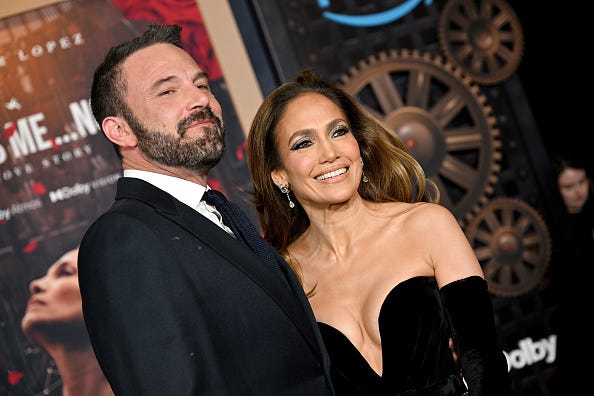
Having rejoiced over their reunion in these pages, I’m saddened to report that Jennifer Lopez and Ben Affleck are getting divorced. Proceeding pro se, J. Lo filed on the two-year anniversary of the couple’s Georgia wedding ceremony, citing “irreconcilable differences.”
Former congressman George Santos (R-N.Y.) had a bad Monday. In the Eastern District of New York (which includes his home base of Long Island), he pleaded guilty to charges of wire fraud and aggravated identity theft, subjecting himself to a mandatory minimum sentence of two years in prison. In the Southern District of New York, Judge Denise Cote dismissed his copyright suit against Jimmy Kimmel, who used videos of Santos from the Cameo platform on Jimmy Kimmel Live. Santos is appealing to the Second Circuit (and might have a decent case, as Josh Barro and Ken White discuss on the latest episode of Serious Trouble).
The rent is too damn high—and according to an antitrust lawsuit that the U.S. Justice Department (DOJ) and eight states filed on Friday, part of the fault lies with the real-estate software company RealPage. The DOJ complaint argues that RealPage’s pricing algorithm, which makes “recommendations” to landlords about what rents to charge, decreases competition in apartment pricing.
After ruling in the Trump immunity appeal, the Supreme Court sent the case back to Judge Tanya Chutkan (D.D.C.) for her to evaluate what specific actions by the former president might be protected by immunity. Some Trump opponents seized upon the idea that Special Counsel Jack Smith use this as an opportunity to subject Trump to a so-called “mini-trial,” by introducing and emphasizing—in a hearing supposedly about the scope of Trump’s immunity—a ton of evidence about the ex-president’s election-related misconduct. But it appears that Smith has opted against a mini-trial, as first reported by Bloomberg News.
Dissents from denials of rehearing en banc, aka “dissentals,” are often viewed as attempts by circuit judges to secure Supreme Court intervention. In Malone v. Williams, Judge Jay Bybee openly declared that one of his reasons for writing a dissental is “as a suggestion to the U.S. Supreme Court that the case should be summarily reversed.” His dissental was joined by thirteen other judges, appointed by four different presidents (although no Biden appointees), so don’t be shocked if the justices take up his suggestion. After all, “Ninth Circuit + grant of habeas relief = summary reversal” is a time-honored formula.
Deal of the Week: AMD’s $4.9 billion acquisition of ZT.
As long as the artificial-intelligence sector remains hot, we can expect more AI-related deals—like the $4.9 billion acquisition of ZT Systems, a provider of server solutions for cloud computing and artificial intelligence, by Advanced Micro Devices Inc., the semiconductor giant. Latham & Watkins is advising AMD, while Paul Weiss is counseling ZT.
In other deal news, it looks like Alaska Airlines’s $1.9 billion acquisition of Hawaiian Airlines will close, after the DOJ declined to challenge the transaction. Meanwhile, SkyDance Media’s on-again, off-again, on-again purchase of Paramount might not happen: Edgar Bronfman Jr. has raised his offer to $6 billion, and the special committee of Paramount directors in charge of reviewing bids has extended the “go shop” period, during which other bidders can make offers, to September 5. [UPDATE (8/26/2024, 10:24 p.m.): Well, that didn’t last long: Bronfman withdrew his bid, so maybe SkyDance will pick up Paramount after all.]
Law Firm of the Week: WilmerHale.
And then there were 14. That’s how many Am Law 100 firms still have a single partnership tier, after WilmerHale’s announcement on Wednesday that it will join the growing number of firms that have non-equity partners. Explaining the move, managing partner Anjan Sahni said a two-tier partnership will provide “more flexibility to attract, promote, and retain the most sought-after talent in a very competitive market.” Flexibility is the main advantage of having a non-equity tier—which I have argued can work well for firms, as long as they manage it properly.
It will be interesting to see what this does to Wilmer’s profits per equity partner, which have generally lagged behind the firm’s prestige. The firm was #26 in the latest Vault prestige rankings (down from #21 in the prior year), but #37 in PPEP. That said, it could take a while to see any effect: although the change takes place immediately in terms of new partners, it will not affect any of the firm’s approximately 250 current equity partners. In other words, no one’s getting removed from the equity tier or “de-equitized,” consistent with Wilmer’s relatively genteel culture (by Biglaw standards).
The other news out of Wilmer this week: it’s representing New York Governor Kathy Hochul in litigation over her decision to pause congestion pricing in Manhattan. It’s exactly the kind of high-stakes, high-profile, public-facing engagement for which Wilmer is known.
In other Biglaw news:
Looking back over the past few years of financial performance for Biglaw, 2021 was awesome, 2022 was atrocious, 2023 was pretty good, and 2024 so far is looking… even better than 2023, but maybe not at 2021 levels.
Starting in January 2025, lawyers in the New York office of Latham & Watkins must come into the office four days a week—the current policy at many of Latham’s peers, including Skadden Arps, Davis Polk, and Simpson Thacher.
Move of the Week: Willkie hiring an 11-lawyer capital-markets group from Mayer Brown.
As I discussed last month, Willkie Farr is on an upward trajectory. This makes it more attractive to laterals—like the 11 capital-markets lawyers who joined the firm’s Chicago office from Mayer Brown. The five new Willkie partners are Edward Best, Jennifer Carlson, John Ablan, Esther Chang, and Susan Rabinowitz, and six associates are making the move along with them. Edward Best, who led cap markets at Mayer Brown, now co-chairs that practice at Willkie.
In other talent-related news:
Marc Elias, a leading election lawyer of the left, joined the group of legal luminaries advising the Harris/Walz campaign—which already includes two former White House counsels, Bob Bauer and Dana Remus.
Paul Hastings continues to grab talent from rivals, this week adding finance partner Ismael Duran from Simpson (where he spent almost 20 years).
Job of the Week: junior partner/senior counsel opportunities in Austin, Texas.
Lateral Link is recruiting on behalf of a dynamic southeast regional firm known for its thriving energy practice. The firm seeks one or more critical partners to advance its goal of being the leading energy and environmental firm in Texas, based out of their key office in downtown Austin—home to important government and regulatory bodies influencing this major industry. The firm, Chambers-ranked for its energy practice (among others) in multiple states and in D.C., combines robust resources with a small-firm culture and friendly atmosphere. Partners are sought for collaboration and leadership in addition to servicing clients. For more information or to apply, contact Wendy Boone at wendyboone@laterallink.com.
It’s hard to believe, but next weekend is Labor Day weekend—and, as mentioned earlier, I might (or might not) skip Judicial Notice, depending on the news cycle. I hope all of you enjoy this final week before the unofficial end of summer.
Thanks for reading Original Jurisdiction, and thanks to my paid subscribers for making this publication possible. Subscribers get (1) access to Judicial Notice, my time-saving weekly roundup of the most notable news in the legal world; (2) additional stories reserved for paid subscribers; (3) transcripts of podcast interviews; and (4) the ability to comment on posts. You can email me at davidlat@substack.com with questions or comments, and you can share this post or subscribe using the buttons below.


Which are the 14 Am Law 100 firms that still have a single partnership tier?
“Judge Thapar is widely viewed as a top SCOTUS contender in a second Trump Administration”——from your lips to God’s ears!