Original Jurisdiction
A Top Trial Lawyer And Father Of 11: Michael Williams
0:00
-51:21

A Top Trial Lawyer And Father Of 11: Michael Williams

A longtime Kirkland partner and parent to children ages 24 to 7, Mike Williams talks about how he and his wife Julin make it all work.

Welcome to Original Jurisdiction, the latest legal publication by me, David Lat. You can learn more about Original Jurisdiction by reading its About page, and you can email me at davidlat@substack.com. This is a reader-supported publication; you can subscribe by clicking here. Thanks!

I’ve been honored to have some of the nation’s leading litigators on this podcast. But I have not had a guest who’s both a renowned courtroom advocate and parent of 11 children—until today.

Meet Michael Williams. After graduating from Georgetown Law, summa cum laude and first in his class, he clerked for then-Chief Judge Douglas H. Ginsburg of the D.C. Circuit and Justice Anthony M. Kennedy of the Supreme Court. Mike then joined the D.C. office of Kirkland & Ellis, where he is a share aka equity partner. He has won numerous honors and accolades over the years, recognized by Chambers and Partners, the Legal 500, and The American Lawyer, among others.

Despite his dazzling legal career, Mike is most proud of being a dad. He had his first child while still in law school, two children during his clerkships, and eight children during his time at K&E. In our conversation, we talked about his contrasting clerkship experiences; what it’s like being a litigator at Kirkland, including how the firm has evolved over the years; why at heart he’s more of a trial rather than an appellate lawyer; and most importantly, how he balances his busy practice with the demands of parenthood (although note that he’s not a fan of the term “work-life balance”).

Kudos to Mike on all his professional and personal success, and early wishes for a happy Father’s Day to him and all the other dads out there.

Show Notes:

Sponsored by:

NexFirm helps Biglaw attorneys become founding partners. To learn more about how NexFirm can help you launch your firm, call 212-292-1000 or email careerdevelopment at nexfirm dot com.
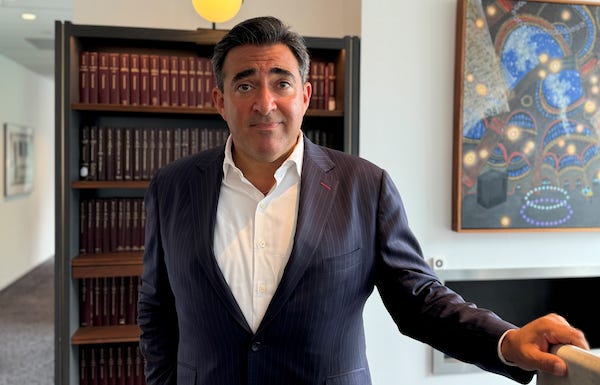
Michael F. Williams (courtesy photo by Kristen Hartley)

Three quick notes. First, this transcript has been cleaned up from the audio in ways that don’t alter substance—e.g., by deleting verbal filler or adding a word here or there to clarify meaning. Second, my interviewee has not reviewed this transcript, and any transcription errors are mine. Third, because of length constraints, this newsletter may be truncated in email; to view the entire post, simply click on “View entire message” in your email app.

David Lat: Welcome to the Original Jurisdiction podcast. I’m your host David Lat, author of a Substack newsletter about law and the legal profession also named Original Jurisdiction, which you can read and subscribe to at davidlat at substack dot com. You’re listening to the forty-eighth episode of this podcast, recorded on Friday, June 7.

Thanks to this podcast’s sponsor, NexFirm. NexFirm helps Biglaw attorneys become founding partners. To learn more about how NexFirm can help you launch your firm, call 212-292-1000 or email careerdevelopment at nexfirm dot com. Want to know who the guest will be for the next Original Jurisdiction podcast? Follow NexFirm on LinkedIn for a preview.

My guest today is one of the nation’s top trial lawyers: Michael F. Williams, a longtime partner in the D.C. office of Kirkland & Ellis. Mike has been recognized for his prowess in the courtroom by numerous authorities, including Chambers and Partners, the Legal 500, and The American Lawyer. One highlight is how he recovered $665 million on behalf of Huntsman Corporation, in a case arising out of fraud in connection with an acquisition—and a grateful Huntsman lawyer described Mike as “the best of a new generation of trial lawyers.”

But I’ve had many amazing trial and appellate lawyers on the podcast. One thing that’s very special about Mike—and that distinguishes him from many other leading litigators—is that he’s a dad of 11 children, ranging in age from 7 to 24.

So I thought he’d be the perfect guest to join me for an episode scheduled to air shortly before Father’s Day—and he didn’t disappoint. If you’re looking for advice and insight on how to juggle work and family—a ton of work, and a ton of family—this episode is for you. Without further ado, here’s my conversation with Mike Williams.

Mike, thank you so much for joining me.

Mike Williams: Thanks for having me, David.

DL: Let’s begin, as I always do, with your childhood and your upbringing. I believe we share a New Jersey childhood in common.

MW: That’s right, David. And I will die on this hill. The best lawyers in the world come from New Jersey. I don’t know if there’s something in the water or there’s something in the culture, but I think New Jersey is a great place to come from if you’re going to practice law. I grew up on the Jersey Shore, Asbury Park—so in the middle of Springsteen country. [Ed. note: Maybe Williams has a point? New Jersey is only one of 50 states and accounts for just three percent of the U.S. population, but around 15 percent of my guests were born or grew up in the Garden State—including, of course, former New Jersey governor Chris Christie.]

DL: And I believe you went to public high school?

MW: I went to Asbury Park High School, graduating with the class of ‘92. It was a great place to be formed in terms of understanding the importance of the law. Asbury Park High School was more of an urban high school at the time, so our involvement with the law and law enforcement was probably different than if you grew up in Rumson or Summit or some of these other places in New Jersey. But it was one of the things that helped cement in my mind that I wanted to become a lawyer.

DL: I read in an earlier interview that you knew you wanted to become a lawyer back in kindergarten, so well before high school. Most grade-school kids have no idea what lawyers even do. What drew you to the law?

MW: I think it’s just that I was an argumentative little kid. I grew up in a big family that was half-Italian, half-Irish—and even in that environment, where people tend not to be shrinking violets about their opinions or their views, I was a kid who constantly asked questions and was never really satisfied with the answers. It meant that I got into a lot of arguments and occasionally fights. And then I realized that the law is really a profession where you can ask questions and not be satisfied with the answers, and at the end of the day, fight it out and see who’s right.

DL: How many siblings do you have?

MW: I’m the oldest of six. My father was the youngest of 16. His dad was a coal miner. That was just reckless. I’m a partner at Kirkland & Ellis and I have a big family, but his was just an old-school Irish family. And then on my mother’s side, she was the second of seven—so again, a big family, where she was second-generation coming off the boat from Italy.

DL: And did you have any lawyers in the family? Were either of your parents lawyers, or did you have aunts or uncles who were lawyers?

MW: No. My dad drove a truck and my mom was a nurse at the county jail in Freehold in Monmouth County, New Jersey. There were no lawyers in the family. We tended to hold lawyers up on a pedestal, like priests and doctors and principals—people you would see occasionally for usually solemn occasions, but otherwise didn’t have any interaction with them.

DL: And then when you went off to Georgetown for college, did you already think you would go to law school after that?

MW: Yeah, from the moment that I got to Georgetown and even before I went to Georgetown. I’d spent two years in Hawaii before enrolling as an undergraduate. I lived with the woman who’s my wife, Julin, and then applied to Georgetown until they accepted me. But I told her from the start that the plan was that I would go to Georgetown, study international law as an undergraduate, and then go to the law school for my legal education.

DL: What led you to go out west?

MW: This is crazy, but I met my wife on a high school trip in Washington, D.C., and after I graduated high school—Georgetown had rejected me—there was a lot going on. My father had just passed away, in an untimely way. I was 18. And a lot of it goes back to Springsteen, “Born to Run”: “Baby this town rips the bones from your back / It’s a death trap, it’s a suicide rap.”

So I got out while I was young. I tracked down Julin, who had joined the Army, and she was stationed in Hawaii, and I moved out there to be with her when I was 18.

DL: And then when did you guys get married?

MW: We got married as soon as Georgetown accepted me. We moved to D.C. and we were living together. This was our second year, and we eloped at first, in part because it was just the economic thing to do. I’d never lived on campus as an undergraduate. I was with Julin at the time, and then eventually we had a big church wedding in her home, which is the territory of American Samoa. We had to save up for that, so it took a few years.

DL: Did you have a lot of family who made the trip out there?

MW: Only my mother, her close friend, and my best man made it out there. It’s 16 hours from New Jersey. It was my mother’s first time on an airplane, so it was a big deal to her. But with Julin’s family, we had about 500 people at our wedding, which at the time was around one percent of the population of American Samoa—so it was a big deal all around.

DL: Oh, that’s great. So returning to Georgetown in D.C., what did you study as an undergraduate?

MW: I went to the School of Foreign Service and I studied international law, and it was a great preparation for law school. We had professors, one in particular named Tony Arend, who actually used the Socratic Method in his undergraduate classes. So by the time I got to law school, that was a huge advantage, being familiar with the case method and the like.

DL: Wow, that’s wild—you were exposed to that as an undergraduate.

MW: And almost strictly by accident. It just so happens that this particular professor loves using case books and loves teaching international law using the case method. And the students who he teaches really benefit from it. I think a very high proportion of them go on to good law schools.

DL: That makes perfect sense. And then speaking of good law schools, you went on to Georgetown immediately after?

MW: That’s right. I went straight through. Julin and I were living off-campus, and we were living together and putting me through school at the same time. So I had a bunch of digressions. I’d worked at a hotel overnight and was guest-relations manager at the Watergate. Julin was waiting tables, and then she got an office job. But we went straight through, in part out of necessity. I couldn’t really take a gap year or anything.

DL: Wow. So it sounds like it was challenging, your early married years and also being a law student.

MW: Oh, you can imagine. We had Rosemary, my oldest child, during the first semester of my second year of law school. And so Julin and I, there was always a struggle to make sure that the financial aid was in and that we were making ends meet, and there were hard choices that we had to make and very small apartments and the like.

But as you know David, it’s nothing that prepares you for having a child, and all of a sudden your life really isn’t your own. So we had Rosemary, my oldest daughter, in my second year of law school, and it was the day before I was hired for my D.C. Circuit clerkship by Doug Ginsburg. It was a good week for me.

DL: Wow, that is great. And then before you graduated, did you have other children besides Rosemary?

MW: I had Rosemary while I was in law school, had Isabella in October of my D.C. Circuit clerkship, and Saleilona, number three, on Christmas Eve during my Supreme Court clerkship. I remember Justice Kennedy making a funny joke about how the timing was just perfect in terms of the needs of chambers, because things slowed down around Christmas.

DL: So tell me about your clerkship experiences. You clerked for two renowned judges. You were of course juggling fatherhood, too—tell me about those experiences.

MW: They were terrific. They were two very different judges and two judges who, as you know, were at least at one point destined for the same Supreme Court seat. That is, D.H. Ginsburg was this computer, a very genial computer, who you would give a fact pattern, and he knew the law and could spit out the right result, especially on issues like antitrust and regulatory matters. And Justice Kennedy, by contrast, famously calls himself a person who agonizes over decisions, and he really cares about fundamental fairness and practicality. So the clerkships were both intense in their own ways, but I felt a little bit like I was getting whipsawed, going from the D.C. Circuit and FERC cases about ohms in Iowa to the Supreme Court, which was a big year for Justice Kennedy, October Term 2002.

DL: I’m not going to go into any confidences, in terms of the cases, but what were some of the memorable or landmark cases that came down during the Term you were at the Court?

MW: Lawrence v. Texas was October Term 2002. The affirmative action cases, Gratz and Grutter. Virginia v. Black on cross burning. For all of the corporate-law listeners out there, State Farm, the big punitive-damages case. It was an intense year because it was a busy year—but boy, it was a fascinating year. I was really blessed, first to be there in the first place, and second to be with Justice Kennedy, who was such a gentleman and who really took lawyers like me, who were first-generation, under his wing, and told me what he thought I should be doing next.

DL: So shifting to that, to your practice, did you go to Kirkland straight after the Court?

MW: That’s right. I’d summered here both in my second-year summer and my 3L summer. I actually did piecemeal work. You remember we were talking about making ends meet while I was in law school. Kirkland was great because they hired me at something like $50 an hour to do Westlaw research and drafting. The scary thing is, David, if they offered me that as a permanent position then, I probably would’ve been tempted to sign. “Mike, we’ll pay you $50 an hour to do our research and writing for the rest of your career.” I might have said, “I’ll take it! Where do I sign up?” But that was great. I’m a Kirkland lifer and in a lot of ways at the firm, I’m pretty distinctive that way.

DL: It’s interesting because Kirkland has been really on this amazing tear, in terms of hiring incredible lateral talent. But let me ask you this, if you remember: what year did you join Kirkland after your SCOTUS clerkship?

MW: It was 2003 that I joined formally, but a lot of the recruiting happened earlier. That was Kirkland during the Ken Starr heyday. When I was a summer, Brett Kavanaugh was a junior partner at the firm. Ken Starr was at the firm, and Paul Cappuccio and Ted Ullyot—a lot of people who were great one-time Kirkland lawyers, who have gone on to do all of these amazing things. Kannon Shanmugam, I’d put him in that category as well.

So it was a great place to be if you were a lawyer who was interested in what appellate law looked like, who was interested in litigation. I didn’t know what private equity was. I never knew that Kirkland would have the financial success that it ended up having in the decades to follow. I came here only because I thought it was a great place to try cases and argue appeals.

DL: Speaking of financial success, do you recall what the Supreme Court clerk bonus was when you joined the firm back in the day?

MW: I know exactly what it was because a very close friend of mine named John O’Quinn, who came up through the ranks with me—we graduated from law school together, he clerked for Sentelle when I was with Ginsburg, he clerked for Scalia when I was with Kennedy—we both suspected we’d return to Kirkland. But Kirkland was so reluctant to be the firm that gave a six-figure bonus, so our Supreme Court clerkship bonus was $95,000 with a $5,000 stipend. So we can’t claim to be pathbreakers, or we can’t claim to be waypoints along the descent into decadence, if that’s how you view it. But I remember how much the Supreme Court clerkship bonus was, because that was when I felt like, “This is great, honey. We’re going back to Hawaii, and we’re going on a vacation.”

DL: Let me ask you maybe a slightly controversial or spicy question. So Kirkland, of course, back in the day had these legendary litigators. You mentioned a number of them, like Ken Starr and Brett Kavanaugh.

The firm is now known as this transactional powerhouse with an amazing private equity and M&A practice. Do you feel the firm has shifted during your time there, and as a litigator, have you had any issues with that?

MW: Some things have shifted. It’s been really fortunate that the management of the firm had the foresight on not just private-equity and transactional work—and to really not only catch the wave, but to create the wave there—but also restructuring. We have the best debtor-side practice in the universe. What an amazing hedge that is when it seems like the economy is crashing down.

So some things have changed. I go into meetings with partners where I don’t admit it, but I probably understand maybe 30 percent of what they’re saying when they’re talking—acronyms about debt financing and long tails and PIPEs and things like that. The culture, the core character of Kirkland, the reason why I came there, that stayed the same no matter how many laterals we bring in, no matter what practices are really influencing the direction of the firm. And there’s a scrappiness. We’ve always viewed ourselves as the brake-caliper lawyers who handle class actions for General Motors. So I think this notion that you could go to Kirkland, you could work really hard, you could do great work, and you could be rewarded for it in a way that puts politics to one side, puts personalities to one side—that’s really subsisted, and it’s one of the things that I think has grown.

DL: How has your practice changed—or maybe it hasn’t—over the years, since you first arrived at Kirkland out of the Supreme Court? I know you have the Supreme Court bar, where you can’t practice before the Court for two years. Did you start off doing appellate work? I feel that now perhaps you’re most well-known for your high-stakes trial work, but tell me about your practice arc over the years.

MW: Well, I hope that this doesn’t influence younger lawyers who are listening to this, but I initially went into it thinking, “I’m a Supreme Court clerk—of course I want to argue appeals.” To me, that’s what a prestige practice looked like. The role models that I had were people like Ken Starr or Ed Warren, who were arguing in front of the Supreme Court.

Then I realized, as I got more involved, (a) those are really hard hours to bill. That is 10 hours on Westlaw and thinking deep thoughts and writing briefs and preparing for arguments. You could go insane doing that for too long without a break—whereas 10 hours preparing for a deposition and asking somebody difficult questions, those hours fly by. You don’t even realize that you’re working if you’re somebody who’s dispositionally suited for it. And the second thing that I realized, (b), was that I could always be an appellate lawyer, maybe, but I’m always going to be that argumentative appellate lawyer, and it really takes me back to when I was the argumentative kid in New Jersey. So I realized maybe trial law is the better speed for me.

DL: And is that what you then started off doing right after you joined the firm?

MW: I did a little bit of both, and I still try to keep a beachhead with appellate litigation. What I found is if you try to do both, it’s hard to keep a 50-50 split—the trial side always expands to fill time.

It’s Friday afternoon. On a Friday afternoon, if I were just an appellate lawyer, I’d probably be polishing off an outline or looking at Westlaw. Whereas as a trial lawyer, I know that just before 5:00 p.m., people are going to be lobbing grenades at me and my team and trying to ruin our weekends. So it’s such a different approach. I feel like the trial side tends to expand to take up more and more of your time.

DL: And if you had to estimate roughly—and I’m sure it varies from year to year—how would you say the percentage breakdown is today for your practice between trial and appellate?

MW: I’d say it’s probably 80-20. And what I’ve found is that a lot of the appellate stuff tends to be pro bono cases that I really enjoy or trials that I’ve handled, and for whatever reason, the client has decided, or internally as a team we’ve decided, that it’s better that I handle it than handing it off to one of our great appellate specialists—like John O’Quinn, who I was just talking about earlier.

DL: In this age of increased specialization, do you find it feasible to still do both trial and appellate work?

MW: A hundred percent. I think the same qualities that make somebody a good trial lawyer, maybe tamped down a little bit, make you a great appellate advocate.

I remember Judge Motz on the Fourth Circuit and an argument that was just terrible for me. She lit into me, David. And then at the end of the argument, as we were shaking hands—that is the Fourth Circuit custom—she said, “I only gave that to you, Mr. Williams, because I know you can take it. You’re a great trial lawyer.” I said, “Okay, but what about your great appellate lawyers? They can take it too.”

You can maintain the split, and it’s the same core skill set. But a lot of it is dispositional, and a lot of it is just time management.

DL: Interesting. Would you say that one or the other is more fun for you?

MW: Yes. And I’ll say for junior lawyers out there who are listening, to the extent that they are, trial law just opens up so many opportunities. One thing I learned early on was that people were hiring Kirkland to handle their appeals because they wanted Judge Starr, and I might write Roman numeral one of a brief that then I gave to Kannon Shanmugam, who incorporated it into an amazing brief—but then it was Ken Starr who was going to argue at the Sixth Circuit.

Whereas if you’re on one of my trial teams, so long as you’ve been around for a year or so, you’re going to end up taking a deposition and maybe arguing a motion at the earliest opportunity I can give you. It’s less of a pyramid. So if you want to feel like a lawyer of the sort that you watched on TV when you were growing up, trial law will give you a lot more opportunities to do that sooner, I think.

DL: Yeah, just to get up on your feet. So let’s turn to that actually. You’re one of the nation’s top trial lawyers. What would you identify as the most important trait or quality for a trial lawyer to have?

MW: Thanks, David. This is going to sound counterintuitive, but I think to be a good lawyer you need a baseline degree of comfort with conflict. And I got that growing up in this Italian-Irish family in New Jersey on the Jersey Shore.

But I think to be a great trial lawyer—not just a good one—you’ve really got to be a good listener. And it’s counterintuitive because everybody thinks of trial lawyers as the fast talkers who stand up. We know about the iconic old Kirkland lawyers who used to sit at counsel table by themselves, and they were tough bosses, and they ran their trial team “one riot, one ranger,” in that kind of style. But I found listening is so key, and so few people do it intently. Do you know what I’m saying?

DL: Oh, totally—and I can see the application in so many scenarios. In a deposition, you need to be listening to what the witness says, rather than just be mindlessly wedded to your outline. During an appellate argument, you need to be listening to the questions the judges are asking you, because those are clues into how they’re thinking. When you meet with a client, just for the relationship, you need to listen to them. It’s interesting because, again, I think we think of trial lawyers as these Clarence Darrow people. So listening, huh?

MW: David, 100 percent. And as you know, most judges will tell you what they’re looking for, whether it’s a motions hearing or an appellate argument. And I take it even a step further. In voir dire—and particularly in jurisdictions where you have open voir dire, where it’s your opportunity to have a conversation with this panel of people—you’ll learn so much there that you can then take and insert into your opening statement or even incorporate into your crosses.

And then when you go back in front of that jury on closing argument…. closing argument is thought of as just an argument, it sounds like it’s one-way, but I’m always looking for even just the barely perceptible nods or the crossed glances with jurors who I’ve had to sit there and couldn’t talk to maybe for weeks and weeks at a time, but we’re sharing the same experience. So being able to listen to them and just pick up on their cues, I think that’s what makes a really great trial lawyer.

DL: Fascinating. And then in terms of you yourself, do you have a personal superpower in terms of a particular talent or skill that’s been crucial to your success as a trial lawyer?

MW: I don’t know if it’s a superpower, but I’ve got a strong chin. I told you about how I grew up, and I found there are so many brilliant lawyers, and many of them have a very difficult time with conflict. And I can see it if you’ve gone to the great schools that you and I have gone to—and in order to get into those great schools, you have this history of people telling you that you’re brilliant and that you’re a genius and you have this feeling like, “As long as I do the work, I’ll get the answer.”

When somebody—whether it’s a judge who could be completely wrong, or could be entirely in the right—starts questioning that, I think a lot of people who are in this profession tend to be very brittle. Whereas you can really kick me in the teeth, and I’m just going to get up with a smile and I’m going to keep arguing my case. And that’s something I learned growing up in Jersey.

Conflict can feel very uncomfortable. It’s not always a lot of fun to be in a tense discussion with the judge. It’s not always a lot of fun to be cross-examining somebody, and it degenerates into argument. But you can say to yourself that there’s an underlying reason here, and there are tools that I can use to put this under control and get a little bit closer to the truth. It’s a long way of saying it, but I think that’s been my superpower: I could be like a fish in water when it comes to that conflict, where a lot of other really smart lawyers might not be as comfortable with it.

DL: What do you attribute that to, in terms of things in your past? Is it growing up in a big family? Is it your time working at a hotel? What things shaped you to be somebody who’s comfortable with conflict?

MW: David, I think it’s all of the above. In fact, I try to encourage it in my family. When we play board games, it’s like, “Katy, bar the door.” You should see us. If we’re playing cribbage or Axis & Allies or anything, I try to teach the kids that competition is healthy; that conflict is okay, so long as it’s purposeful; and that nothing really hurts that bad that you can’t recover from it. And at the hotel, my job as guest relations manager was, people would press a little button on their phone and if they had a complaint, they would let me have it, and I’d have to try to make it right. So I felt like all of that was really good training for being a trial lawyer.

DL: Are you the managing partner of a boutique or midsize firm? If so, you know that your most important job is attracting and retaining top talent. It’s not easy, especially if your benefits don’t match up well with those of Biglaw firms or if your HR process feels “small time.” NexFirm has created an onboarding and benefits experience that rivals an Am Law 100 firm, so you can compete for the best talent at a price your firm can afford. Want to learn more? Contact NexFirm at 212-292-1002 or email betterbenefits at nexfirm dot com.

You’ve worked on a number of headline-making cases. What would you say you are most proud of? And maybe it isn’t one of the cases from the headlines, but if you had to pick a matter that you’re the most proud of, what would it be?

MW: There’s recency bias here, of course. There was a settlement that I reached with a great team. We ended up not having to litigate it. But this was within the past year, where we’d learned about people whom we brought over from Afghanistan after the fall of Kabul. These are people who had helped the U.S. who were clearly fleeing persecution from the Taliban and whom the United States invited to the United States to come and stay here and resettle.

Congress had passed this statute overwhelmingly, in a bipartisan fashion, that said, “We’re going to give you asylum decisions within 150 days of your application.” And then the pro bono community throughout the country stepped up and found there are about 20,000 people who are likely to apply for this, and there were individual lawyers for each individual case as soon as you could ask for it, David. But the United States delayed decision. They didn’t follow the statute. And so there was a great team of us from Kirkland who filed a motion for preliminary injunction and said, “You’ve got to start giving people decisions.” And again, this is just less than a year ago that we filed the case—so maybe it’s not the one I’m most proud of, but the one that I’m most proud of as I’m thinking about it today.

We’ve settled with the government. Judge Tigar in the Northern District of California was just terrific in forcing us to settle. Magistrate Judge Van Keulen sat us in a virtual room and said, “You’re going to work this out because Judge Tigar is telling me that’s what you need to do.” And we required the government to give us status updates until they’d finally reached, I think it was, 90 percent of the applications that were outstanding. Even in the middle of their emergency on the southeast border, and USCIS saying they can’t do it, we got word just last month that they had processed something like 18,000 asylum applications since we filed our lawsuit, in compliance with our settlement agreement.

So I’m really proud of that when I think about all these people who were in limbo. And because of this team at Kirkland & Ellis, and because Kirkland & Ellis let us do it, we really made an impact on their lives.

DL: Wow. I just got to chill as you were saying that. That’s really amazing. And I spoke to your colleague, Jackie Haberfeld, of course, about Kirkland’s amazing pro bono practice. So congratulations to you.

I like that pick for two reasons. One, of course, because of the difference you’re making in the lives of people fleeing persecution. But two, I also like the fact that it’s a case that was successful because it wound up with a good settlement. It wasn’t, “Oh, and then the jury issued this verdict,” or “Oh, then the Supreme Court issued this opinion.” I think it’s very representative of what real lawyers do.

MW: Totally. And we were fortunate to have good judges. We were fortunate that the people on the other side from the government were acting in good faith. They really wanted what we wanted too, which is to follow the law and keep our promises that the United States has made. But they were just under such tremendous pressure because their resources were spread so thin with, as I said, the immigration issues on the border. So it just took Kirkland filing a lawsuit, even when people told us that we would get dismissed, and then good judges and a good party on the other side to come together and say, “How can we fix this?” I think it got fixed.

DL: Wow. That’s great.

So despite your amazing legal career, I’m guessing you’re even more proud of being a dad, which is a big part of why I wanted to have you on the show ahead of Father’s Day. I’ve had some amazing litigators on here as guests, but I have not yet had a guest who has 11 kids.

I guess the obvious question is, how the heck do you do it?

MW: Gosh, David, this is going to sound like an unfair answer, but I feel like just barely. I go back and forth sometimes thinking like I’m some super dad who’s doing everything right and then immediately thinking, “Oh my goodness, I’m going to ruin these poor creatures who I’m responsible for.”

When you’ve got a family that’s the size of our family, there’s just so much going on—and I’ll just give you an example. In the past two weeks, our number two, Isabella, graduated from Georgetown—very proud of her. Number five, Mikey Junior, graduated from Gonzaga High School. Number one, Rosemary, took the foreign service exam. Number 11 turned seven. That was just a couple of days ago. Number three, Saleilona, left for Taiwan to study Chinese. Number four, Helena, left for France for a month to study French.

And that’s on top of all of the basketball tournaments and volleyball games and end-of-year play dates and pool parties. There’s just always something going on. I feel like we just barely keep it together.

DL: Oh my gosh, that’s amazing. Also, I have to say, I couldn’t help noticing, you refer to your kids obviously by name, but you also mentioned the number. Is that something internal to your family, or is that not really a thing?

MW: It is internal to our family, but it’s also in getting used to speaking about our family, it’s so much more descriptive if I tell you that it’s number eight who ended up winning her volleyball game than if I say Teuila—who’s lovely, and she’s a great daughter—but the numbers really give you a sense of what their personality might be, and I think there’s some truth to that.

DL: Just for the record, what’s the age range of your 11 kids?

MW: Number one, Rosemary, is 24, and number 11, Frankie, just turned seven a couple of days ago.

DL: That’s amazing. I have to ask you, even just logistically, how do you do it? Do you have a stay-at-home spouse? Do you have a lot of help in terms of caregivers? How do you manage this? You mentioned all the play dates and pool parties and extracurriculars. Who even physically takes these kids to all these places?

MW: Well, two parts to that. The first is—I worry about sounding old-fashioned or retrograde about this, but this is both honest and factual and also giving credit where credit’s due—I’ve got the benefit of just having an amazing wife. And I have a lot of friends, and we have a lot of people who are in our community, in our family, who are single parents. I give all the credit in the world to them. I just don’t know how they do it—that, I think, is really difficult.

But as you know, David, if you’ve got a partner, however you want to define that partner, and if you can share the load, if it’s a decent partner, you’re going to make things easier. If it’s an amazing partner like I have, it’s going to make it not just doable, but joyful. So that’s a really big part of it: I just have to give credit to Julin there. I say she works within the home. She put me through law school, and as soon as I got my first summer associate gig, she stayed home with the children. And it’s been really fortunate that we were able to do that. So that helps.

And of course she has extended family who help. We have nieces who live with us who help out a lot. I always joke with her that she’s got Julin Williams Incorporated, and that somehow between our friend group, our community, our schools, people that she needs to hire, if she has to hire them, she manages to make it all work and keep it all on her calendar.

DL: Wow, that’s great. It reminds me of the saying that it takes a village. You just have a lot of people pitching in, it sounds like.

MW: A hundred percent. And as I mentioned, I’m Italian-Irish, and Julin’s Samoan. Those are both cultures where you treat your friends like family and you treat your family like people who are supposed to do the work for you around the house, and you treat even your acquaintances like friends. And I think that’s been the secret of Julin’s success in making sure that we keep our heads above water and take care of our kids.

DL: Given the age span from 24 to seven, do the older kids also at a certain point start to help out with their younger siblings?

MW: I would say immediately they start to help, David. I think that the trick to successful parenting is just figuring out the right task for the right age level and teaching the kid that they’re expected to do what you need.

So from eight years old, Rosemary was doing the dishes for us. Frankie, my seven-year-old, can operate a gas grill—I know that, even if I wouldn’t ask him to do it. But my 13-year-old Jacob, my number seven, he can put chicken on the grill. It’s just a matter of figuring out what needs to be done, what child could do that task. In that sense, it’s a little bit like managing a litigation team: who’s the right person for what project, and then also with the expectation that they’ll do it.

DL: It’s really great, actually, because—and I have to confess, Zach and I are not great about this—a lot of parents are not great about making their kids self-sufficient. We do too many things for our kids. We’re helicopter parents. It sounds like a lot of your kids, even the younger ones, have learned how to do tasks at a pretty early age.

MW: It’s been a priority for us. And part of it is we just don’t know any better. Even once we’d moved into our home in Alexandria, Virginia, which is a really large home, there was a time when we had all five boys in one bedroom—just two bunk beds and Frankie in the middle, even though we had three empty rooms.

And I think part of it is, like I said, setting expectations. We want them to know that they’re an 11th of the pie. It’s expected that they’re going to help out around the house. There are great benefits from growing up with a family where you can go to good schools, where you can go play basketball, and you can have friends come over. And so they’ve got a lot of benefits for this, but we expect them all to contribute. And even the ones who are in college, they’ve all gone to Georgetown, so they’re all close by. They live on campus when they’re at Georgetown. But we expect that they’re going to help out when we need it.

DL: That’s great. So you mentioned expectations. I wonder if you have thoughts on so-called “work-life balance.” Is it achievable, or is it this unrealistic concept that ends up burdening people? What are your thoughts on that term?

MW: David, I despise that term. I think it’s so misleading. I think it’s structurally false. It conjures up this picture of scales, and maybe you could put a birthday party or a confirmation party on one end of the scale, and then a PI hearing on the other end of the scale, and it balances up. And that’s just not how life works.

You understand: practicing law is an all-consuming profession. You can’t really multitask and be a lawyer at a high level. And parenting is also all-consuming. You can’t really multitask when you need to sit down with your child and talk about something that’s going on on a fifth-grade exam. So I hate the term “work-life balance.” And for me, I’ve always tried to talk about it with other lawyers at the firm or people who come to me with questions and say that it’s really just a matter of expectations and boundaries, not balance.

DL: Say more about that. What do you mean about boundaries, for instance?

MW: Boundaries—this is key. There are certain aspects of my time, of my life, that I just keep off-limits to work. And I’ve been at Kirkland for 20 years. I’m not somebody who shies away from work. I’ve been in the crucible, whether it’s the Supreme Court clerkship or trial law under really great trial partners at Kirkland who demand a lot from us, and I demand a lot from my team today.

But just to give you one example: I told you I’m Italian-American from New Jersey, and Sunday dinner in my family is just about sacrosanct. Most of my clients understand that on Sunday, I’m having meatballs with my family, and it’s just four or five hours, plus the two hours it takes on Saturday night to make those meatballs. But that’s family time. And so I expect the kids to come back. I’m not going to do any calls then, I’m not going to be doing any work then, clients tend not to ask me to do it, and that’s my time.

And I’ve also found myself trying to encourage associates to figure out what their time is, too. Set those boundaries. It doesn’t have to be Sunday dinner; you’re not me, you don’t share my upbringing. But figure out whether it’s Saturdays, you take your kids to the museum, or you just make sure that you take your partner out for a nice dinner on a Wednesday night and just say, “This is my time.” And I think that’s really important, setting those boundaries.

DL: I like that because it’s very practical, actionable advice. So let me follow up and ask, do you have any additional tips on time management? Because I think for busy, overwhelmed working parents, time management is this great burden.

MW: Right. I think there, especially when it comes to parenting, it’s recognizing that sometimes it’s those little things that you do with the children. And it seems almost incidental—it’s not a big grand romantic gesture, where you’re buying them a pony or you’re taking them to the circus. But in my family, during the school year, we have mandatory breakfast at 6:30 in the morning. That sounds terrible, I know. For teenage girls who were going to high school and who were staying up late at night worried about exams, I know it was hard for them, for example, when it was their time. But I know, as a partner at a law firm, that it’s unlikely I’m going to be home for dinner at night. And breakfast at least gave us one meal together as a family, where we could talk about what we were going to do that day.

So it’s setting those little practices. And it doesn’t have to be 6:30 breakfast. It could just be, when you get report cards—it starts out as an accident—let’s go get froyo. And then the next time around, it’s just laziness: well, it’s report card day, let’s go get froyo and talk about report cards. And all of a sudden, in the kids’ minds, it becomes their tradition: “It’s report card day, I’m going to talk about grades with dad and get froyo.” And I think there’s just something beneficial to that, that when you’re a lawyer and a parent you don’t realize, but that the kids remember years and years going forward.

DL: So it is, in a way, about carving out these times, whether it’s that 6:30 breakfast or the Sunday dinner. But it’s interesting you mentioned having meals and maybe not making it home in time for dinner. In March 2020, in the early days of the pandemic, Vivia Chen wrote this great profile of you and your family where you talked about working from home, both the challenges and the advantages, and you mentioned being able to have three meals together.

Now that the pandemic is thankfully in the rearview mirror, how would you describe your family situation today? Have you gone back to the way things were pre-pandemic, or are there any things that you started doing during that period that have stayed with your family?

MW: The memories have stayed with the family. And I should say first that I adore Vivia—I think that article was the nicest thing that she ever wrote about anybody associated with Kirkland & Ellis, and I think she would probably agree with me on that, too. And I appreciate her having written it. But as I mentioned, I’ve got a daughter in Taipei right now, and a daughter in Paris right now, and as a dad of children older and younger, I don’t miss the pandemic.

David, I remember when the news of your coming down with Covid hit. I think that really brought it home for so many of us in the legal profession who appreciate your work and hearing about your story. For me, I tell you, that’s when it really scared me.

So I don’t want to say that there were silver linings to the pandemic—but no, things have gone back to normal. We take the memories with us. Because of my children’s ages, they were all graduating from college or graduating high school, at least the first tranche of them, the first four at around the time of the pandemic. So in a way, a lot of their memories of important rites of passage were times that they spent at home surrounded by their brothers and sisters. There were good and bad aspects to that, but looking back, I have such great memories of spending that time together.

DL: I think in a way it was this very special time. We spent a lot more time with my parents and my parents-in-law and with our son, so that was a nice thing about that very weird and also challenging period.

Let me ask you this: has your work as a lawyer influenced your role as a dad? Or vice versa—has your role as a dad, your fatherhood, affected your lawyering?

MW: A hundred percent, David. John Mulaney is a great standup comedian and a Georgetown alum, and he tells a great series of jokes—if people haven’t heard it, they should listen to it—about what it was like growing up with a father who would cross-examine them. And if you’re a trial lawyer or you’re an appellate advocate, if you’re a litigator or if you’re a lawyer, generally you have a certain way of getting to the truth that often involves asking difficult questions, and it’s hard for it not to have an impact on your children.

I think also of just the legal notion of keeping promises and maintaining contractual promises. There might be times that the children will ask, “Mommy, can we have ice cream after dinner? And Julin will say, “Sure.” I’m always the one who says, “Well, maybe—let’s see how things go.” Because I won’t break a promise to them. I want to make sure that if I tell them something, they can bank on it. And that comes from being a lawyer, I think.

On the other end of the spectrum, boy, being a father, especially being a father and watching my children grow, with the oldest being 24 now, really gives me such a different perspective on what associates might be going through, in terms of developing empathy and knowing whether they have children or not, whether they have a significant other or not—just the of day-to-day personal issues that somebody goes through when they’re not writing briefs and not on Westlaw and not getting deposition outlines ready. Being a parent really humanizes people in a way that’s underrated. I’m sure that you’ve seen that, too.

DL: No, absolutely. Let me ask you: over your career at Kirkland, or you could even include the clerkships if you like, can you think of a particular situation that was really one of your toughest situations in terms of trying to... I won’t say “balance,” but juggle being a parent and being a lawyer? Maybe it was a trial. Maybe it was a family illness. But is there a particular thing that you think was your biggest challenge?

MW: I can remember it very vividly. It was my first first-chair jury trial experience, and it was a case that was pending in Santa Clara County, and it was going to be an eight-week jury trial. And staring down the barrel of that case…. It was a case for a great client of mine, and I was really grateful for the opportunity—but I knew that as the leader of the trial team, I had to be there on weekends. I couldn’t go home more than the people who I was asking to stay at the trial site and work these 18-hour days alongside me. It was a very, very difficult case where I think we had, at least from the outset, what looked like a very small chance of winning. We ended up winning, which was great. But I remember thinking to myself, “I’m going to be missing this birthday, I’m going to be missing this basketball tournament—how am I going to explain it to my children?” This was going back more than 10 years at this point.

And that was when—over red wine, sitting in my hotel room—I really realized this is where the expectations come into play. As long as the children understand that I’ll make it to the important stuff, even if I have to move heaven and earth to do it, just like I’ll make it to my client’s important stuff, even if it means that I’ve got to sacrifice on that end—and I’ll always be honest them about what my commitments are—it’s all going to turn out well in the end.

DL: That’s remarkable. That was long enough ago that it was before, say, FaceTime or Zoom, right? So it wasn’t even like you could catch up with your family and see your kids or your wife’s face, right?

MW: That’s so true. And David, it seems so silly in retrospect, but I used to have my children take their homework and send me an email explaining what they did in school that day. I remember showing it to some of my partners and them going, “I can’t believe you put your children through this.” But I just wanted to feel present in their life. So all of them had an email account and they would send me an email and say, “Dad, this is what happened today. And my math homework was pages 83 to 85 in the red book, and I did it.” And so at least I felt like I was a part of their life. And surprisingly to me, the kids look back on that and they don’t think, “Boy, Dad abandoned us for that jury trial or any of the jury trials since,” but rather, “Boy, you really tried.”

DL: That is great. You should write a parenting book with all of these little tricks and hacks and all of that. And parenting books are very hot because everybody is looking for guidance and wants to be told how to do this complicated thing. So I know you probably don’t have much time, given your practice and still being a dad with young kids at home, but maybe it can be your retirement project—I don’t know.

MW: Thanks, David. Also, I’d want to hold out judgment until we see how Frankie turns out, too.

DL: I want to ask you one last question before we go to the speed round. You’ve been a father pretty much throughout your legal career. You had Rosemary when you were still in law school, and you had two more kids while you were still clerking. How has being a working parent changed for you over the past quarter-century or so?

MW: David, it is a sea change. This is something where I could look backwards a little bit from when I entered the legal profession with my first clerkship in 2001, and there were legends about how difficult it was for both parents. We all know how difficult it is for working mothers and then for working fathers too, there was this perception that employers would ask for even more from us because they were thinking, “You’re not a working mom, why should you even bother?”

I still remember when Nina Pillard was arguing a case in the Supreme Court during my Term, she argued to the justices that one of the benefits of the Family Medical Leave Act was that it made both genders equally disfavored to employers—that is, both of them could take family leave. And she pointed this out to the Supreme Court as this real advantage of the Act. And looking back, I can see that that’s taken root. It’s so great to know that clients still want people to work hard and they still insist upon excellence, especially from law firms like Kirkland & Ellis. We know their expectations are high. But it’s no longer the case that a client says, “I’m going to need you to do that on Sunday afternoon, and we’ve got to schedule the call for this time.” I found that there’s such a greater humanity.

The other aspect is—and this is more individual, but it’s individual for the lawyers who are listening to this too—it gets better. I think I remember being on the verge of quitting when I was a third-year associate and thinking, “Am I going to do this for the rest of my life? And how will I ever make this work in terms of family and spending time with my children?” And as you develop within the profession, you get so much more control over what you’re doing that not only has the profession gotten better—there’s still a lot of progress that they need to make in terms of respecting parents and respecting families and respecting people’s personal lives—but even if you feel like you’re overwhelmed right now, if you stick with it, I predict it’s going to get better for you two years out, five years out. That is, it’s a temporary problem, in that you have more control over your practice and you can improve your circumstances and spend more time with your family.

DL: That’s really great to hear, and I hope that will be a good message of hope for a lot of listeners out there who might be going through tough patches right now as either parents or lawyers or both.

Let’s go to our little speed round. It is four questions that are the same for all my guests. And my first question is, what do you like the least about the law? And this can either be the practice of law, down in the trenches of being a trial attorney, or it could be law as an abstract system of governance.

MW: I think I’d take the trenches as a trial-attorney perspective, and I’ll say there’s still this belief that being tough, being a Rambo lawyer, is a substitute for approaching disputes with skill, preparation, professionalism. It still persists to this day. I think because there are fewer jury trials now, it’s gotten even worse. You see such bad behavior in discovery—in depositions, for example. And I think it’s because so many lawyers, especially in Biglaw, never actually get to the jury, never actually get to the judge, and so they take out all this pent-up frustration in silly discovery disputes. If that were to end, if we could change that perspective, the practice of law would be so, so much more pleasant.

DL: Oh, that’s so interesting. I hadn’t thought about that consequence of the decline in jury trials.

My second question, is what would you be if you were not a lawyer?

MW: Boy, David, that’s hard for me. I told you I’ve known since I was in kindergarten. And there are times when I joke with my wife about how I should just quit and get a hot dog cart and set up shop in Myrtle Beach. And she says, “You’d be the most argumentative hot-dog cart vendor. Nobody would ever go to you for hot dogs. Just stick with your strengths.” So it’s really hard for me to imagine anything else. I know that sounds sad, right?

DL: Well, it’s interesting: years ago I used to do this “career alternatives” column at Above the Law, and I think I once profiled someone who left Kirkland to start a nail salon or something like that. So you don’t have any idea for a side-hustle business?

MW: I make good meatballs. So maybe that’s it.

DL: Oh, okay. I was actually going to ask when you mentioned that: who’s making the meatballs, and where’s your recipe from?

MW: The recipe is handed down. I always say it’s Italian-American poor-people food. So I use a lot more cheese and a lot fewer breadcrumbs than my great-grandmother did. But it’s still the basic recipe handed down, and it’s me making Sunday dinner with the help of my family.

DL: Oh, that’s great. So my third question is, how much sleep do you get each night?

MW: Nowadays, unless I’m in trial, I make sure to get six, even seven hours. It’s just much more important, and I’m starting to realize how important it is. I’ve got an Oura ring, I track my sleep every night. I got my wife one, and we compete about it. Early on, during that third-year associate time when I was talking about where things seemed grim and you just needed to break through it, I did a lot more all-nighters, and I deprived myself of sleep a lot then—maybe four hours a night. But I’m really realizing, and I think the profession is realizing, that sleep is preparation.

DL: Yeah, that’s so true. One of my recent guests, Paul Shim from Cleary, talked about how when he was at MIT as an undergraduate, it was this mark of pride to pull all-nighters, but now he doesn’t do that anymore because he realizes it’s not healthy.

MW: No, no. Agreed.

DL: My last question is, any final words of wisdom, such as career advice or life advice, for my listeners?

MW: I think it would be not to be scared of having a successful legal career and also doing things that are completely unrelated to the law that are really your life’s dreams. Julin and I didn’t set out to have a big family. We’re just, I think, poor planners who are very much in love with each other, and that’s how it ends up.

But to those who ask how you can have 11 kids and a successful legal practice, I’ll say that as long as you’re thinking about what your expectations are, what your support network is, and how you can make boundaries that say what’s important to you, don’t be afraid. Even though it’s important to me and part of my identity that I’m a good lawyer, it’s even more important to me that I’m a good father and that I’m a good husband. As long as you can keep those priorities in mind, don’t be afraid to do more.

We hear about how the law is—and I even said earlier that the law is—an all-encompassing profession. And that’s true. But you can always spend another hour on your closing argument the night before you have to give it. You can always spend another hour on a Saturday morning watching Bluey with your seven-year-old. It’s just a matter of saying, “Where am I going to draw the line here and make sure that I can have this work?”

DL: Wow. That is really inspiring. So thank you so much, Mike. I really appreciate all of your wisdom. I’ve learned some things that I can apply in my own life. And early wishes for a happy Father’s Day!

MW: Thank you so much, David, and right back at you—I appreciate it.

DL: Thanks so much to Mike for joining me. As a working parent myself, I greatly appreciated his insights. I wish him, and all the other dads out there, a very happy Father’s Day.

Thanks to NexFirm for sponsoring the Original Jurisdiction podcast. NexFirm has helped many attorneys to leave Biglaw and launch firms of their own. To explore this opportunity, please contact NexFirm at 212-292-1000 or email careerdevelopment at nexfirm dot com to learn more.

Thanks to Tommy Harron, my sound engineer here at Original Jurisdiction, and thanks to you, my listeners and readers. To connect with me, please email me at davidlat at substack dot com, or find me on Twitter, Facebook, and LinkedIn, at davidlat, and on Instagram and Threads at davidbenjaminlat.

If you enjoyed today’s episode, please rate, review, and subscribe. Please subscribe to the Original Jurisdiction newsletter if you don’t already, over at davidlat dot substack dot com. This podcast is free, but it’s made possible by paid subscriptions to the newsletter.

The next episode should appear two weeks from now, on or about Wednesday, June 26. Until then, may your thinking be original and your jurisdiction free of defects.


Thanks for reading Original Jurisdiction, and thanks to my paid subscribers for making this publication possible. Subscribers get (1) access to Judicial Notice, my time-saving weekly roundup of the most notable news in the legal world; (2) additional stories reserved for paid subscribers; (3) transcripts of podcast interviews; and (4) the ability to comment on posts. You can email me at davidlat@substack.com with questions or comments, and you can share this post or subscribe using the buttons below.

Share

Discussion about this episode

User's avatar

Ready for more?